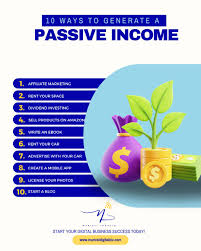
It feels like everyone is talking about passive income these days. You see the ads, you hear the whispers. People making money while they sleep.
It sounds amazing, right? But then you start digging. You find lots of ideas.
Some sound too good to be true. Others are complicated. You wonder, “Does this actually work for regular people?” You’re not alone in this.
It’s totally normal to feel a bit lost. You want to build something for your future. Something that gives you freedom.
But where do you start? And who can you trust?
Many people look for proven ways to earn passive income. They want to see real examples of success. Newsletters focused on high-yield passive income ideas offer these insights. They share case studies and success stories. This helps readers understand what’s possible and how others achieved it.
The Heart of High-Yield Passive Income Newsletters
So, what exactly are these high-yield passive income newsletters? Think of them as your personal guides. They are curated collections of information.
This information focuses on making money that keeps coming. It doesn’t need your constant work. The “high-yield” part means they aim for good returns.
Not just a little bit. They want you to see significant growth over time. These newsletters often share more than just ideas.
They give you the “how-to.” They break down complex topics. They show you the steps involved. This is crucial.
Knowing about an idea is one thing. Knowing how to make it work is another. Many people struggle because they get stuck on the details.
A good newsletter makes those details clear. They aim to empower you.
The core idea is simple. You put in some effort or money upfront. Then, that investment works for you.
It generates income without you trading your time directly for it. Passive income can come from many places. It could be from digital products you create once.
Or from investments that pay dividends. It might be from real estate you rent out. Or even from things like affiliate marketing.
The newsletters we’re talking about often highlight emerging trends. They look for opportunities that might be overlooked. They also stress smart strategies.
It’s not about luck. It’s about informed choices.
Why do these newsletters focus on success stories? Because they understand you. You need proof.
You need to see that others have walked this path. And they succeeded. These stories are inspiring.
They show what’s achievable. They also offer practical lessons. When someone shares their journey, they often reveal mistakes.
They share what they learned. This is gold. It helps you avoid common pitfalls.
It gives you a clearer picture of the road ahead. It’s like having a friend who has already done it. They tell you, “Be careful here,” or “Try this instead.” This is the real value.
It builds trust. It makes the dream of passive income feel much closer.
These newsletters are also about community, in a way. Even though you’re reading them alone, you’re part of a group. A group of people all trying to build better financial futures.
They share knowledge. They celebrate wins. They help each other navigate challenges.
This sense of shared purpose is powerful. It keeps you motivated. It reminds you that you’re not on this journey by yourself.
The ultimate goal is often financial freedom. It’s about having choices. It’s about not being tied to a 9-to-5 job if you don’t want to be.
It’s about having more time for family, hobbies, or travel. High-yield passive income ideas newsletters are designed to point you in that direction.
My Own Brush with the “Passive Income Dream”
I remember clearly when I first got serious about passive income. It was a few years back. I was working a job I didn’t love.
The days felt long. My energy was always drained by the time I got home. I’d scroll through social media and see all these “gurus.” They were showing off their fancy cars.
They talked about “escaping the rat race.” It looked so easy for them. I felt a mix of envy and frustration. I wanted that freedom.
I wanted to build something that worked for me.
So, I dove headfirst into research. I read blogs. I watched videos.
I signed up for dozens of free newsletters. Most of them just gave vague advice. Or they pushed some expensive course.
I felt like I was drowning in information. Nothing felt concrete. Then, one evening, I stumbled upon a newsletter that was different.
It didn’t promise overnight riches. It talked about building systems. It shared actual case studies of people who had built online businesses.
One story really stuck with me. It was about a woman who created an online course. She was an expert in knitting.
She spent months creating the course. It had videos, guides, and patterns. She launched it.
At first, sales were slow. But she kept promoting it. She engaged with her students.
Over time, it started selling consistently. She wasn’t actively teaching anymore. She was just managing the sales and customer service.
She was earning money while she knitted for fun!
Seeing that story shifted something in me. It showed me that it wasn’t just hype. It was possible.
It took work, yes. It took dedication. But the result was something that kept giving.
That newsletter became my go-to. It helped me understand the types of effort that pay off long-term. It wasn’t about finding a magic button.
It was about finding smart ways to leverage my skills and time. It was a game-changer for my mindset. It made the passive income dream feel real.
It gave me a tangible goal.
Key Elements of Successful Passive Income Streams
Digital Products: Ebooks, online courses, templates, stock photos. Create once, sell many times.
Affiliate Marketing: Promote other people’s products. Earn a commission on sales.
Investing: Stocks, bonds, real estate. Money working for you.
Rental Income: Physical property, equipment, or even digital assets.
Royalties: From books, music, patents, or software.
Unpacking Real-World Success Stories
When we talk about “real success stories,” what do we mean? It’s not just about big numbers. It’s about the journey.
It’s about overcoming challenges. It’s about adapting and learning. Many newsletters focus on specific niches.
This allows them to share deeper insights. For example, some might focus solely on creating and selling online courses. Others might look at dividend investing.
Or perhaps building niche websites that earn through ads or affiliate links.
Let’s consider a common type of passive income: digital products. Think about an ebook. Someone who loves baking might write a cookbook.
They might spend weeks testing recipes. They could take beautiful photos. Then they format it nicely.
They might sell it on their own website. Or through platforms like Amazon Kindle Direct Publishing. A success story here isn’t just about selling a million copies.
It’s about someone who now has a product. This product brings in sales every month. They might spend a few hours a month updating it or running ads.
But for the most part, it’s hands-off. This frees them up to write another ebook. Or to pursue other interests.
The initial effort has paid off.
Another example is niche websites. Imagine someone passionate about indoor plants. They start a blog.
They write articles about plant care. They review different types of pots and soil. Over time, they build an audience.
They might earn money from ads displayed on their site. They could also include affiliate links. When a reader buys a plant or a pot through their link, they get a commission.
This takes time to build. You need to create a lot of valuable content. You need to get people to visit your site.
But once it’s established, it can become a steady income source. The website owner might only need to write new articles occasionally. Or update old ones.
The rest of the time, the site works for them.
What about investing? This is a classic. Stories of people building a dividend stock portfolio are common.
They start by investing a small amount regularly. They reinvest the dividends. Over years, this portfolio grows.
It starts generating enough income to cover some of their living expenses. These stories emphasize patience. They highlight the power of compound growth.
They also talk about risk management. It’s not about picking the hottest stock. It’s about building a solid, diversified portfolio that generates steady income over time.
These newsletters often share analysis. They explain why certain investments are chosen. They discuss the underlying companies.
They show the long-term perspective.
These stories aren’t about “get rich quick.” They are about smart strategies. They are about consistent effort. They are about understanding the market.
They show that passive income is a marathon, not a sprint. The people sharing these stories often express gratitude. They talk about the relief they feel.
They talk about the extra time they have. They talk about being able to support their families better. Or take care of aging parents.
These are the real wins. They are what make the pursuit of passive income so compelling for many.
Contrast Matrix: Passive Income Myths vs. Reality
| Myth | Reality |
| Passive income means doing nothing at all. | It requires upfront work or investment. Maintenance is often needed. |
| You’ll get rich overnight. | Building significant passive income takes time and patience. |
| It’s only for tech-savvy people or investors. | Many passive income streams suit different skills and interests. |
| Once set up, it runs forever without issues. | Markets change. Products need updates. Investments require monitoring. |
The ‘How’ Behind the High Yield
What makes a passive income idea “high-yield”? It’s about the potential return on your initial effort or capital. It’s not always about the absolute amount of money.
It’s about the efficiency of that money or effort working for you. A high-yield idea, in this context, often means that for every hour you put in, or every dollar you invest, you have the potential to see a significantly larger return over time.
For instance, creating a successful online course. If you spend 100 hours creating a course, and that course sells for $200. If it sells 1,000 times over its lifetime, that’s $200,000.
Your initial 100 hours could generate a massive return. This is high-yield. Compare this to a job where you might earn $30 per hour.
To make $200,000, you’d need about 6,667 hours of work. The digital product has a much higher “yield” on your time.
Similarly, in investing, a high-yield dividend stock might pay a higher dividend percentage than a savings account. If you invest $10,000 and it pays a 5% dividend yield, you get $500 per year passively. If that same $10,000 in a savings account yields 1%, you only get $100.
The dividend stock has a higher yield, assuming its risk is managed appropriately. Newsletters often analyze these yield potentials. They look at the factors that drive them.
This might include market demand for a digital product. Or the financial health and dividend policies of a company.
These newsletters also explore emerging areas. Think about blockchain technology or decentralized finance (DeFi). While complex, some applications within these spaces can offer high yields.
For example, staking cryptocurrency. You lock up your coins to support a network. In return, you earn more coins.
The yield can be very attractive. However, these often come with higher risk. A good newsletter will explain these risks.
They will show how to mitigate them. They will present the information in a way that’s understandable. This includes exploring areas like peer-to-peer lending.
Or investing in fractional real estate. The goal is to find opportunities where your initial input can grow substantially without constant supervision.
The “high-yield” aspect also means looking at scalability. Can the income stream grow without a proportional increase in your work? A freelance writer can earn more by taking on more clients.
But this is active income. A writer who creates and sells an ebook can sell hundreds or thousands of copies without writing another word for each sale. That’s scalability.
That’s high-yield. Newsletters that focus on this look for business models and investments that can scale. They investigate how successful individuals have achieved this scaling.
They share the strategies that worked for them.
Quick Scan: Popular Passive Income Avenues
- Online Courses: Teach a skill or hobby.
- Ebooks: Share knowledge or stories.
- Affiliate Marketing Websites: Review and recommend products.
- Dividend Stock Portfolios: Invest in companies paying profits.
- Rental Properties: Own real estate and collect rent.
- Create an App: Develop a useful mobile application.
- Licensing Photos/Music: Earn from your creative work.
Navigating the Pitfalls: Lessons from Others
It’s not always smooth sailing. Even with the best information, people make mistakes. This is where learning from others’ failures is just as important as learning from their successes.
High-yield passive income ideas can sometimes come with hidden costs or unexpected challenges. For example, someone might invest heavily in a specific cryptocurrency. They see huge gains initially.
But they don’t understand the volatility. The market crashes, and they lose a significant portion of their investment. A good newsletter would have cautioned about diversification and risk management.
They might have shared stories of others who lost money by going “all-in” on one asset.
Another common pitfall is what I call the “set it and forget it” trap. People create a digital product or set up an investment. They think their work is done.
But markets change. Algorithms update. Customer needs evolve.
If you don’t occasionally check on your passive income streams, they can dry up. I’ve seen this happen with websites. A site might rank well for a while.
But if the content isn’t updated, or if search engine rules change, it can fall in rankings. Suddenly, traffic drops. Income follows.
The “passive” element becomes less effective. These newsletters often highlight the need for ongoing monitoring, even if it’s minimal. They share stories of people who had to pivot their strategies.
Or update their offerings to keep their income flowing.
Scams are also a big concern. The promise of easy money attracts a lot of bad actors. These might be pyramid schemes disguised as investment opportunities.
Or online courses that promise to make you a millionaire with no real substance. Success stories in reputable newsletters often serve as a filter. They showcase legitimate methods.
They emphasize hard work and long-term value. They warn against unrealistic promises. For example, a newsletter might feature someone who spent months learning a skill.
Then they used that skill to create something of value. This is a stark contrast to someone promising you can make $10,000 in a week with no effort. Learning to spot these red flags is crucial.
And seeing real, achievable case studies helps build that discernment.
Sometimes, the “passive” aspect is misunderstood. Someone might start a rental property business. They buy a property.
They rent it out. They expect it to be completely hands-off. But then the tenant has a major plumbing issue.
Or the roof needs replacing. These are significant, time-consuming, and costly events. They require active management.
Many successful property investors have systems in place. They hire property managers. They build emergency funds.
They understand that “passive” often means “managed by others” or “requiring periodic, strategic intervention.” Newsletters that cover this often interview people who have built effective management systems. They share the operational details. This provides a realistic view of what it takes to make even “passive” ventures truly sustainable.
Observational Flow: Building an Affiliate Site
Phase 1: Niche Selection. Choose a topic you’re interested in and has audience potential.
Phase 2: Content Creation. Write helpful, in-depth articles about the niche.
Phase 3: SEO Optimization. Help search engines find your content.
Phase 4: Affiliate Program Joining. Sign up for programs relevant to your content.
Phase 5: Monetization & Promotion. Add affiliate links naturally and promote your site.
Phase 6: Analysis & Iteration. Track what works and refine your strategy.
What This Means For You: Realistic Expectations
The most valuable thing these success stories offer is a dose of reality. They show that passive income is achievable for everyday people. But it requires effort, learning, and patience.
It’s not a magic wand. It’s a strategic approach to building wealth over time.
When is it normal to see results? For digital products, it might take months. You need to create the product, market it, and build an audience.
For investing, it takes years. Compound growth is slow at first. It accelerates over time.
For niche websites, it can also take months to build traffic and authority. The key is consistency. Small, regular efforts compound into significant results.
When should you worry? If something promises immense returns with no risk. If it requires you to recruit others rather than sell a product.
If it feels too good to be true, it probably is. Also, if you’re investing, don’t put all your eggs in one basket. Diversification is your friend.
If a particular passive income stream suddenly stops performing, don’t panic. Analyze why. Is it a market shift?
Is your content outdated? Can you adapt? Often, a strategic adjustment can bring it back.
Simple checks can help. For digital products, look at reviews and sales history if possible. For investments, research the company or fund thoroughly.
Understand its financials and dividend history. For websites, check traffic sources and engagement. Are people actually reading and interacting with your content?
The “passive” income streams that thrive are usually those that provide genuine value to an audience. Or those that are backed by sound financial principles.
It’s important to align your passive income goals with your lifestyle. Do you have time for upfront work? Do you have capital to invest?
What are your risk tolerances? A newsletter that features diverse success stories allows you to see different paths. You can find one that resonates with your personal situation.
It helps you set realistic goals. It keeps you from getting discouraged when you don’t see massive results immediately. The journey of building passive income is rewarding.
It’s about gaining control over your finances and your time.
Stacked Micro-Sections: Common Passive Income Assets
Real Estate: Physical property generates rent. Requires management or a property manager.
Stocks: Dividend-paying stocks offer regular income. Growth potential also exists.
Bonds: Fixed-income securities. Generally lower yield but lower risk than stocks.
Intellectual Property: Royalties from books, music, patents. Creates income from creations.
Online Business: Ebooks, courses, affiliate sites. Scalable digital assets.
Quick Tips for Starting Your Passive Income Journey
If you’re inspired by these success stories, here are a few starting points. They are simple and actionable.
Start Small and Learn: Don’t try to do everything at once. Pick one idea that interests you. Dedicate a small amount of time or money to it.
Learn as you go. Mistakes are part of the process.
Focus on Value: Whether it’s a product, content, or investment, focus on providing real value. People pay for solutions to problems or for things they enjoy. This is the foundation of any sustainable income stream.
Be Patient and Persistent: Passive income is rarely instant. It requires consistent effort over time. Celebrate small wins.
Keep moving forward even when progress feels slow.
Educate Yourself Continuously: The world of finance and online business is always changing. Stay curious. Read.
Listen. Learn from reputable sources. This is where newsletters focused on success stories are invaluable.
Manage Your Risk: Never invest more than you can afford to lose. Diversify your efforts and investments. Understand the risks involved in any venture.
Build Systems: As you grow, look for ways to automate tasks or outsource them. This is key to making your income truly passive. Think about processes and efficiency.
Frequently Asked Questions
What is the fastest way to start earning passive income?
There isn’t a truly “fast” way to earn significant passive income that is also sustainable and low-risk. Most quick methods involve high risk or are not truly passive. Building a small affiliate website or creating a simple digital product can start generating income relatively quickly if you focus on a specific, in-demand niche and promote it well.
However, “fast” is relative, and it still takes consistent effort.
Do I need a lot of money to start passive income?
No, you don’t always need a lot of money. Many passive income streams can be started with skills and time, like creating an ebook or an online course. Investing in stocks or real estate requires capital, but you can start small with fractional investing or by saving diligently over time.
The key is to match the method to your available resources.
Is passive income truly passive?
Often, the term “passive” is a bit of a misnomer. Most passive income streams require some upfront work or investment. They also usually require ongoing maintenance, marketing, or monitoring.
For example, a rental property needs management, and an online course might need updates. The goal is to minimize your active time involvement over time, making it largely hands-off.
What are some common mistakes people make with passive income?
Common mistakes include expecting instant results, not diversifying income streams, falling for “get rich quick” schemes, failing to manage risk, and not updating or maintaining their passive income assets. Another mistake is not understanding the market or audience for their chosen method.
Can passive income replace a full-time job?
Yes, for many people, passive income can eventually replace a full-time job. However, this usually takes significant time, consistent effort, and smart strategy. It often involves building multiple passive income streams and reinvesting profits to grow them over time.
It’s a long-term goal for most.
What are the safest passive income ideas?
Safest options typically involve lower yields but also lower risk. These might include high-yield savings accounts, certificates of deposit (CDs), or investing in very stable dividend-paying stocks and bonds, particularly those from well-established companies. Building a niche website with evergreen content can also be relatively safe long-term.
How can newsletters help me find successful passive income ideas?
Newsletters focused on passive income often share case studies, success stories, and market analysis. They highlight proven strategies and emerging opportunities. By showcasing how others have succeeded, they provide real-world examples, practical advice, and inspiration.
This helps you understand what’s achievable and how to approach it.
Finding Your Path to Financial Freedom
The world of high-yield passive income is vast. But it’s not inaccessible. Seeing the real stories of people who have achieved it is incredibly powerful.
It shows that with the right knowledge, consistent effort, and a bit of patience, you can build something meaningful. Something that works for you, even when you’re not actively working on it. These newsletters are like digital mentors.
They guide you, they inspire you, and they show you the way forward. Your journey to financial freedom starts with understanding what’s possible. And these real-world examples are your roadmap.