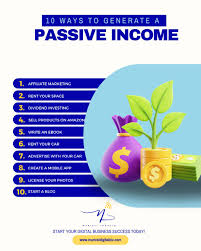
High-yield affiliate programs can create substantial passive income by connecting people with products or services they need. This involves strategic promotion and careful program selection to maximize earnings with minimal ongoing effort.
Understanding High-Yield Affiliate Programs
What exactly makes an affiliate program “high-yield”? It’s not just about a big payout. It’s about the potential for consistent, significant earnings over time.
Think of it as finding a gold mine that keeps on giving. These programs often come with higher commission rates. They might also offer recurring commissions.
This means you get paid not just once, but every time a customer renews. Some programs have a long cookie duration. This gives you more time to earn from a referral.
The key is choosing programs that align with your audience. Your audience needs to trust you. They also need to be interested in what you’re promoting.
A high commission rate means little if no one buys. High yield also relates to the conversion rate. This is how often people who see your link actually buy something.
The best programs make it easy for people to buy. They have great products and smooth checkout processes.
We’re talking about affiliate marketing. It’s a performance-based marketing model. A business rewards its affiliates for each customer brought in through the affiliate’s marketing efforts.
This is usually a percentage of the sale. Or it can be a flat fee for a lead or a click.
For affiliate programs high-yield passive income idea 2025, we focus on elements that boost earnings without constant work. This includes:
- High Commission Rates: Getting a larger slice of each sale.
- Recurring Commissions: Earning money over and over from the same customer.
- Long Cookie Durations: More time to get credit for a sale.
- Strong Product Demand: Products people are actively looking for.
- Reliable Affiliates: Reputable companies that pay on time.
These factors combine to make affiliate marketing a truly passive income source. It takes upfront work, but the rewards can last.
My First Foray into Affiliate Marketing
I remember starting out. I was in my early twenties, working a lot of odd jobs. I wanted something more.
Something that felt like it was building towards a future. I’d heard about making money online. It seemed like magic.
I set up a simple blog about hiking gear. I didn’t know much about SEO or marketing. I just loved hiking.
I wrote reviews of boots, backpacks, and tents. I signed up for a few big online stores’ affiliate programs. My first commission was maybe two dollars.
It felt like a million bucks! But the money trickled in. It was not passive at all.
I had to write new posts constantly. I felt like I was chasing every sale. It was frustrating.
I almost gave up. Then I stumbled upon a niche product. It was a special kind of water filter.
People needed it. They searched for it online. I wrote one detailed review.
I used a program that offered a good commission. That one review started earning me money every week. It was then I realized the power of choosing the right program.
Not just any program. This shifted my whole approach.
Choosing the Right High-Yield Affiliate Programs
Picking the best affiliate programs is like picking good seeds for your garden. You want them to grow into something great. Here’s how to look for them.
First, think about what you’re good at or what you love. What topics could you talk about for hours? What problems do you enjoy solving for others?
Your passion will shine through. It makes your content more real and helpful.
Next, research the actual programs. Don’t just go for the first one you see. Look at the commission structure.
Is it a percentage? Is it a flat fee? How much is it?
Are there recurring payments? For passive income, recurring is gold. Check the cookie duration.
A 30-day cookie is okay. A 90-day or even longer cookie is much better.
Consider the products or services themselves. Are they high-quality? Do they have good reviews from customers?
If you promote junk, people won’t buy it. They’ll also stop trusting you. You want to promote things you’d actually use yourself.
This is the E in E-E-A-T. It’s about Experience, Expertise, Authoritativeness, and Trustworthiness. Companies that have a good reputation are usually better to work with.
They pay on time. They support their affiliates.
Look into their affiliate support. Do they offer marketing materials? Do they have an affiliate manager you can talk to?
Good support can make a big difference. It helps you learn and grow your earnings. Also, check the payout terms.
When do they pay? What’s the minimum amount you need to earn before they pay you? Make sure these terms work for you.
Some common categories that often have high-yield affiliate programs include:
- Software and SaaS (Software as a Service): Many companies offer 20-50% recurring commissions.
- Financial Services: Especially credit cards, loans, and investment platforms.
- Online Courses and Education: High-value digital products with good margins.
- Web Hosting and VPNs: Often have high one-time payouts or good recurring rates.
- Health and Wellness: With specialized products and supplements.
Think about where your skills and interests fit best within these areas.
Finding Programs: Where to Look
Many affiliate networks exist. They are like marketplaces connecting businesses with affiliates. Some popular ones include:
- ShareASale: Huge variety of merchants across many niches.
- CJ Affiliate (formerly Commission Junction): Another large network with big brands.
- Impact Radius: Known for good technology and tracking.
- Rakuten Advertising: Works with many well-known retailers.
- Amazon Associates: Though commissions are lower, it has massive product selection and trust.
Don’t forget to check directly on company websites. Many offer their own affiliate programs. Especially for software or online courses.
Understanding Commission Structures
The way you get paid is crucial for passive income. Commission structures vary a lot. Understanding them helps you pick the programs with the most potential for you.
1. Pay-Per-Sale (PPS): This is the most common. You earn a percentage of the sale price when someone buys a product through your link.
For example, if you sell a $100 product with a 10% commission, you make $10. High-yield PPS programs might offer 20%, 30%, or even 50% commission. This is great for physical products with a good markup, or digital products.
2. Pay-Per-Lead (PPL): Here, you get paid when someone fills out a form or signs up for something. This could be a free trial, a newsletter, or a quote request.
You don’t need a sale for this. These are good for services like insurance or financial products. PPL payouts are usually smaller than PPS.
But they can be easier to achieve.
3. Pay-Per-Click (PPC): This is less common for high-yield passive income. You earn a small amount for every click on your affiliate link.
Ads on websites often work this way. The earnings are very low per click. You need massive traffic to make decent money.
This is generally not the best strategy for passive income.
4. Recurring Commissions: This is where passive income truly shines. You earn money every time the customer you referred makes a payment to the company.
Think of subscription services like streaming, software, or membership sites. If you refer someone to a service that costs $20 a month, and you get a 30% recurring commission, you earn $6 every month that customer stays subscribed. This is huge for building a stable, passive income stream.
Over time, a few hundred recurring customers can generate significant monthly earnings.
5. Tiered Commissions: Some programs offer higher commission rates as you reach certain sales targets. For example, you might earn 10% for the first 50 sales, then 15% for sales 51-100, and so on.
This rewards top performers and encourages more sales.
6. Lifetime Commissions: A rare but very lucrative structure. You earn commissions on all purchases made by a customer for their entire lifetime as a customer of that company.
This is usually found in niche markets.
When looking for affiliate programs high-yield passive income idea 2025, prioritize those offering strong recurring commissions. They offer the most stability and passive growth.
Quick-Scan Table: Commission Types
| Commission Type | How You Earn | Best For | Passive Income Potential |
|---|---|---|---|
| Pay-Per-Sale (PPS) | Percentage of sale price | Physical products, digital courses | Moderate to High (if products sell well) |
| Pay-Per-Lead (PPL) | When a user signs up/informs | Services (insurance, loans), trials | Low to Moderate (easier conversion) |
| Recurring Commissions | Ongoing payments from subscriptions | SaaS, memberships, recurring services | Very High (builds over time) |
| Pay-Per-Click (PPC) | Small amount per click | High-traffic sites (not ideal for passive) | Very Low (needs huge volume) |
Building Your Platform for Passive Income
You can’t just join a program and expect money to appear. You need a place to share your affiliate links. This is your platform.
It’s where you connect with people. It’s also where you build trust.
1. Niche Websites/Blogs: This is a classic. You create content around a specific topic.
Think “best espresso machines,” “beginner gardening tips,” or “remote work tools.” You write reviews, guides, comparisons, and tutorials. This type of content naturally leads to affiliate links. People are searching for answers.
You provide them. These sites can generate significant passive income once they rank well in search engines.
2. YouTube Channels: Video is powerful. You can review products, show tutorials, or share your experiences.
Many creators earn well through affiliate links in their video descriptions. Some even get direct sponsorships. For passive income, evergreen content (content that stays relevant for a long time) is key.
Think product reviews or “how-to” guides.
3. Social Media: Platforms like Instagram, Pinterest, or TikTok can work. You need to build a following.
Pinterest is often excellent for affiliate marketing. You create visually appealing pins linking to products or blog posts. Instagram stories with swipe-up links (if you have the follower count) or link-in-bio tools are also used.
Building a loyal following is crucial here. This takes consistent effort to build trust.
4. Email Lists: This is a highly effective method. You offer something valuable (like a free guide or checklist) in exchange for an email address.
Once you have subscribers, you can nurture that relationship. You send them helpful content and, when appropriate, recommend affiliate products. An email list is an asset you own, unlike social media followers.
The goal is to create content that is genuinely helpful. It should answer questions or solve problems for your audience. When you do this consistently, people will trust your recommendations.
They will be more likely to click your links and make purchases. This is the foundation of long-term passive income.
Platform Styles: A Quick Look
- Content Focus: Informative articles, video demos, visual inspiration.
- Audience Engagement: Comments, shares, questions answered.
- Monetization: Direct affiliate links, resource pages.
- Passive Potential: High for evergreen content that ranks well.
My Experience with Content Creation for Passive Income
After my initial success, I decided to build a more robust platform. I started a blog focused on home office setups. Many people were working from home and needed desks, chairs, monitors, and ergonomic tools.
This was a growing niche. I spent weeks researching keywords. I looked for questions people were asking online.
I wrote detailed reviews of office chairs. I created guides on building the perfect standing desk. I found a few affiliate programs for office furniture and tech.
One program had a great commission on standing desks. It also offered a good recurring rate on ergonomic software. I focused heavily on creating helpful, in-depth content.
I made sure to include high-quality images and clear explanations. I also started building an email list. I offered a free checklist for setting up an ergonomic home office.
Slowly, traffic started to grow. People were finding my articles through Google. They were clicking my links.
The standing desk commissions started adding up. Then the software recurring payments began. It wasn’t overnight.
But within about six months, I was earning enough from this blog to replace one of my part-time jobs. It felt amazing. The blog was still generating income even when I wasn’t actively writing new posts every day.
That’s the magic of evergreen content and well-chosen affiliate programs high-yield passive income idea 2025.
Strategies for Maximizing Earnings
Once you have your platform and your chosen programs, you need to work smart. How do you turn good potential into great earnings? It’s all about optimization and strategic promotion.
1. Understand Your Audience Deeply: What are their pain points? What are their desires?
What are they struggling with? The more you know them, the better you can recommend solutions. Use surveys, analytics, and engage with comments and emails.
2. Create High-Quality, Evergreen Content: As mentioned, content that stays relevant for a long time is your best friend for passive income. Think tutorials, detailed guides, and product comparisons.
Google loves helpful content. Your audience will too.
3. Strategic Link Placement: Don’t just stuff links everywhere. Place them naturally within your content where they make sense.
Use clear calls to action. For example, “Click here to check the latest price on Amazon” or “Learn more about this software here.”
4. Build an Email List: This cannot be stressed enough. Email marketing allows you to communicate directly with your audience.
You can segment your list and send targeted offers. Nurture relationships with valuable content before pushing sales.
5. Diversify Your Programs: Don’t put all your eggs in one basket. Promote several related affiliate programs.
This spreads risk and increases your overall earning potential. If one program changes its terms, you won’t lose everything.
6. Promote High-Ticket Items: If your niche allows, promote products or services with higher price points. Even a 5% commission on a $500 item is $25, which is much better than a 10% commission on a $5 item ($0.50).
This is where SaaS and some high-end courses shine.
7. Leverage Social Proof: If possible, share testimonials or case studies from users of the products you promote. This builds credibility and encourages others to buy.
8. Track Your Results: Most affiliate programs offer dashboards. Use these to see what’s working.
Which links are getting clicked? Which pages are driving sales? Which programs are performing best?
Adjust your strategy based on this data.
9. Run Promotions and Special Offers: If a program allows, you can sometimes negotiate special discounts for your audience. Or you can run limited-time campaigns to drive urgency and sales.
Always check program rules first.
By applying these strategies, you can significantly boost your earnings from affiliate programs high-yield passive income idea 2025. It’s about working smarter, not just harder.
Contrast Matrix: Common Mistakes vs. Smart Moves
Mistake: Promoting too many unrelated products.
Smart Move: Stick to a clear niche and promote complementary products.
Mistake: Only focusing on commission rates.
Smart Move: Consider conversion rates, product quality, and customer support too.
Mistake: Not building an email list.
Smart Move: Offer a valuable freebie to collect emails for direct communication.
Mistake: Ignoring analytics and data.
Smart Move: Regularly review performance to see what works and what doesn’t.
Real-World Scenarios and Considerations
Let’s look at how this plays out in different real-world situations. Imagine Sarah, who loves baking. She starts a baking blog.
She reviews stand mixers, bakeware, and specialty ingredients. She joins programs like Amazon Associates and a few niche baking supply stores. She focuses on detailed recipe tutorials and “best of” lists for baking equipment.
Her high-yield strategy is promoting a particular high-end stand mixer that has a great commission. She also promotes a subscription box for baking supplies, which gives her recurring income. Her blog traffic grows through search engines, and she also builds an email list with baking tips.
Then there’s Mark. He’s a tech enthusiast. He creates video reviews of software and online tools.
He focuses on productivity apps, VPNs, and project management software. These often have high recurring commissions. He partners with companies like NordVPN, LastPass, and various SaaS providers.
His YouTube channel is his primary platform. He puts affiliate links in the description and mentions them in his videos. He is careful to only recommend tools he genuinely uses and trusts.
This builds his authority and ensures his audience feels confident in his recommendations.
Considerations for these scenarios:
- Niche Focus: Both Sarah and Mark succeed because they stick to a specific niche. This helps them attract a targeted audience and build expertise.
- Content Value: Their content is helpful and solves problems for their audience. This is why people return and trust their advice.
- Program Selection: They chose programs with good commission rates, recurring options, and products that fit their niche and audience.
- Platform Choice: They leveraged the platform that best suits their content style (blog for written content, YouTube for video reviews).
- Trust and Transparency: They are open about their affiliate relationships. This is crucial for maintaining trust. Many countries require disclosures (like “This post contains affiliate links”).
It’s important to remember that “passive” doesn’t mean “no work.” It means the income is not directly tied to your time spent actively working. You invest time upfront to build the system. Then, that system generates income with less ongoing effort.
For affiliate programs high-yield passive income idea 2025, the upfront work is creating excellent content and choosing smart programs. The ongoing effort is minimal maintenance and occasional updates.
What This Means for You: Normal vs. Concerning
When you’re building passive income through affiliate marketing, it’s good to know what to expect. What’s normal progress, and what might be a red flag?
Normal Signs of Progress:
- Slow, Steady Growth: Your traffic and earnings increase gradually over weeks and months. This is very common.
- Consistent Clicks, Occasional Sales: You see people clicking your links, but not every click turns into a sale. This is normal. Conversion rates vary widely.
- Focus on Evergreen Content: Your most popular content is your older, still-relevant articles or videos.
- Growing Email List: More people are signing up for your newsletter or free resources.
- Positive Audience Feedback: People thank you for your helpful content.
Concerning Signs to Watch For:
- No Traffic After Months of Work: If your content isn’t getting found by search engines or shared on social media, something might be wrong with your strategy.
- Lots of Clicks, No Sales: This could mean your audience isn’t a good fit for the products, or the product pages themselves have issues.
- Sudden Drop in Earnings: If your income suddenly plummets, check if a program changed its commission, if a popular product was discontinued, or if search engine rankings dropped.
- Unreliable Payouts: If the affiliate program is consistently late paying you or makes excuses, it’s a major red flag.
- High Bounce Rates: If people land on your page and leave immediately, your content might not be what they expected, or your site might be slow to load.
Understanding these signals helps you stay on track. It also helps you pivot your strategy if needed. The goal is sustainable passive income, not a quick, unsustainable boom.
Quick Fixes and Tips for Better Performance
Sometimes, small tweaks can make a big difference. Here are a few tips to help your affiliate programs high-yield passive income idea 2025 efforts:
- Use Clear Calls to Action (CTAs): Tell people exactly what you want them to do. “Click here to buy,” “Get your free trial,” “See the price on Amazon.”
- Improve Site Speed: A slow website frustrates visitors and hurts search rankings. Optimize images and use good hosting.
- Mobile-Friendly Design: Most people browse on their phones. Ensure your website looks and works great on mobile devices.
- Regularly Update Content: Keep your popular articles fresh. Update prices, product links, and information. This keeps them relevant for search engines and readers.
- Add Internal Links: Link from one relevant article on your site to another. This keeps visitors on your site longer and helps search engines discover more of your content.
- Use Comparison Tables: These make it easy for users to compare different products side-by-side. They are often highly effective for conversions.
- Be Transparent: Always disclose that you are using affiliate links. This builds trust and is often legally required. A simple disclaimer at the top of a page or post works well.
These aren’t huge overhauls. They are small adjustments that can boost user experience and, in turn, your affiliate earnings. Think of them as regular tune-ups for your passive income engine.
Frequently Asked Questions
What are the best niches for high-yield affiliate programs?
Some of the most profitable niches often include software and SaaS, financial services, online education, health and wellness, and high-ticket physical products like electronics or luxury goods. These niches typically have higher commission rates, recurring income opportunities, or higher product values.
How much passive income can I realistically expect from affiliate marketing?
This varies greatly. Beginners might earn a few dollars a month. With consistent effort and the right strategy, it’s possible to earn hundreds or even thousands of dollars per month.
Top affiliates earn six or seven figures annually. It depends on your niche, audience size, conversion rates, and chosen programs.
Do I need a lot of traffic to make money with affiliate programs?
You need targeted traffic. While more traffic generally means more potential earnings, quality matters more than quantity. A small, highly engaged audience that trusts your recommendations can be more profitable than a large, unengaged one.
However, for significant passive income, growing traffic over time is essential.
How long does it take to see passive income from affiliate marketing?
It takes time and effort upfront. You might start seeing a few sales within a few months. Significant passive income typically takes 6-12 months or even longer to build.
This is because it takes time to create content, build an audience, and rank in search engines.
What’s the difference between active and passive income in affiliate marketing?
Active income involves trading your time directly for money, like writing new reviews every day. Passive income is earned from assets you’ve built (like a blog post or video) that continue to generate revenue over time with minimal ongoing effort. Affiliate marketing aims for the latter.
Are there any risks involved with affiliate marketing?
Yes, there are risks. These include changes in affiliate program terms, platform algorithm updates affecting traffic, increased competition, and the possibility of investing time and effort without seeing the desired returns. Building a diverse income stream and staying adaptable are key.
Conclusion
Exploring affiliate programs high-yield passive income idea 2025 offers a clear path to building income that works for you. It’s not a get-rich-quick scheme. It requires smart choices and dedicated effort upfront.
By understanding commission structures, choosing quality programs, and building a trustworthy platform, you can create a powerful revenue stream. Remember to focus on helping your audience. Their trust is your greatest asset.
With patience and consistent strategy, you can achieve true financial freedom.