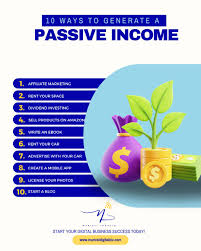
Creating digital products can offer a high-yield passive income stream. This involves identifying a valuable niche, crafting a digital item like an ebook or course, and setting up a system for sales and delivery that runs with minimal ongoing effort, allowing for significant profit over time.
What is a High-Yield Digital Product Idea?
A high-yield digital product idea is one that has the potential to bring in substantial income without constant work. It’s not just about making a digital product. It’s about making the right digital product.
This means it needs to solve a real problem or fulfill a strong desire for a specific group of people. The more people want it, and the better you meet their needs, the higher the yield can be.
Think about it this way: if you create a guide on how to fix a common household problem that many people face, and you do it really well, you could sell that guide to thousands. Each sale adds up. The “high-yield” part comes from the combination of demand, your ability to meet that demand effectively, and the low overhead of selling digital goods.
The “passive” part means once you’ve made the product and set up the sales system, it should require very little of your time each day or week to keep earning money. This is the magic. It’s about building an asset that works for you.
Why Focus on Digital Products for Passive Income?
There are so many ways to try and make money. But digital products have some special advantages for building passive income. For starters, the upfront cost is often much lower than a physical product.
You don’t need to worry about manufacturing, shipping, or inventory. Your main investment is your time and knowledge.
Once a digital product is made, like an e-book, a course, or a piece of software, you can sell it to as many people as you want. There’s no limit on how many copies you can distribute. This scalability is key to high yields.
A single e-book can be bought by hundreds, thousands, or even millions of people.
Also, digital products are incredibly convenient for customers. They can download or access them instantly, anywhere, anytime. This makes them appealing.
And for you, the seller, automation is your friend. You can set up websites and payment systems that handle everything from purchase to delivery automatically. This is what makes it truly passive.
In essence, you’re creating a valuable item once, and then you’re building a system to sell it repeatedly. The effort is front-loaded. The payoff can be long-term and significant.
It’s a smart way to leverage your skills and passions into a sustainable income source.
My First Dip into Digital Products: A Humbling Experience
I remember when I first heard about passive income from digital products. I was working a job I didn’t love, and the idea of making money while I was doing other things felt like a lifeline. I got so excited!
I thought, “I love cooking. I’ll write an e-book about quick weeknight meals!”
So, I spent weeks typing up recipes, taking blurry photos with my old phone, and designing a cover in a free online tool. It looked okay, I thought. I nervously uploaded it to a platform and waited.
Days turned into weeks. Crickets. Maybe a single sale from a very supportive friend.
I felt a huge wave of disappointment. What did I miss?
The core issue wasn’t the recipes themselves. They were decent. The problem was I hadn’t really figured out if people needed another quick meal e-book.
Or if my e-book was better than the thousands of free recipes already online. I hadn’t looked for a specific problem or a unique angle. I learned a hard lesson that day: passion is great, but market demand is what pays the bills.
This experience taught me that just because I think something is a good idea doesn’t mean others will pay for it. You have to do your homework. You have to find a real need and then create a solution that’s truly valuable and stands out.
That was a big turning point for me.
Finding Your High-Yield Idea: Listen to the Market
The best digital product ideas often come from listening. What are people struggling with? What do they wish they knew?
What problems do they complain about constantly? Your goal is to find a specific pain point that a group of people has. Then, you create a digital product that solves that pain point really well.
Where do you listen? Online forums, social media groups, comment sections of blogs, and even customer reviews are goldmines. Look for repeated questions or frustrations.
For example, if you see many people in a gardening group asking how to keep pests off their tomatoes without using harsh chemicals, that’s a signal. You might be able to create a guide or a video series on organic pest control for tomatoes.
Another approach is to think about skills you have. Are you great at organizing? Maybe you can create a digital planner or an organizing system.
Are you a whiz with spreadsheets? You could make templates for small businesses. Do you understand a complex topic really well?
You could create a course explaining it simply.
The key is to look for needs that are not perfectly met right now. Or, find a way to explain something complex in a super simple, accessible way. The more specific your target audience and their problem, the easier it is to create a product they will love and pay for.
Don’t try to be everything to everyone. Be the perfect solution for a specific group.
We can categorize these ideas into a few key areas that tend to do well:
Types of High-Yield Digital Products
- Information Products: These are things like e-books, guides, checklists, and workbooks. They provide knowledge or instructions.
- Educational Content: This includes online courses, webinars, workshops, and membership sites where people learn a skill or topic.
- Tools & Templates: Think spreadsheets, graphic design templates, website themes, software, or apps that help people do a task faster or better.
- Creative Assets: This could be stock photos, music, fonts, or digital art that other creators use.
The “What If” Game: Finding Your Niche
Let’s play a little game called “What If.” It helps uncover potential digital product ideas. Take a moment and think about your own life. What are things you’ve figured out?
What problems have you solved for yourself or others?
For example, “What if I could create a simple guide on how to meal prep for busy professionals, focusing on only 5 ingredients per meal?” Or, “What if I made a set of printable budgeting worksheets for young families?” Or even, “What if I developed a short video series showing people how to meditate for just 5 minutes a day to reduce stress?”
The trick is to combine something you’re good at or interested in with a problem someone else has. Don’t underestimate the value of your unique experiences. What seems common to you might be a significant challenge for someone else.
Your life experiences are a rich source of ideas.
Consider these questions to spark your thinking:
Idea Generation Questions
- What problems do my friends and family often ask me for help with?
- What skills do I have that others admire or want to learn?
- What topics do I love reading about or learning about in my free time?
- What products or services do I use that I think could be improved?
- What are common frustrations I hear people talking about in my community or online?
Market Research: Is Anyone Actually Buying This?
This is where many people stumble. You have a great idea, but is there a market for it? Market research is crucial for a high-yield product.
You need to find out if people are willing to pay for your solution. This isn’t about asking friends and family for their opinion; it’s about finding objective evidence.
One of the best ways to do this is to look at what’s already out there. If you’re thinking of writing an e-book on “Gardening for Beginners,” do a quick search on Amazon or Google Books. Are there other e-books on this topic?
Are they selling well? Look at the number of reviews and the star ratings. This tells you there’s demand.
If there are already hundreds of books, you need to find a way to make yours unique or better.
You can also check online course platforms like Udemy or Skillshare. Are there courses on your topic? How many students have they enrolled?
This is a great indicator of demand for educational content.
Keyword research tools can also be very helpful. They show you what terms people are searching for on Google. If many people are searching for “how to train a puppy at home” or “easy sourdough starter recipe,” that’s a strong signal that there’s interest.
You can then tailor your product to match those search terms.
Don’t be discouraged if you see competition. Competition often means there’s a market. Your job is to find a specific angle or a underserved segment within that market.
Perhaps you can focus on a niche within a niche. For example, instead of “dog training,” maybe focus on “positive reinforcement puppy training for apartment dwellers.”
Types of Digital Products and Their Passive Income Potential
Let’s explore some common digital product types and why they can be great for passive income.
E-books and Guides
These are classic for a reason. You write it once, and you can sell it infinitely. The upfront work is writing and formatting.
The passive part is the automated sales process. A well-written e-book that solves a specific problem can be very lucrative.
Example: A detailed guide on navigating the college application process for high school students. This is a stressful time for many families, and a clear, step-by-step guide can be incredibly valuable.
Online Courses and Workshops
These require more upfront effort to create videos, lesson plans, and supporting materials. However, they can command higher prices. Once the course is built, you can sell access to it repeatedly.
Think of it as creating a digital teacher.
Example: A comprehensive course on learning a new software program, like Adobe Photoshop for beginners, or a course on digital marketing basics for small business owners. The demand for new skills is always high.
Templates and Printables
These are often simpler to create than full courses. Think of budget trackers, social media templates, resume templates, or digital planners. People love having pre-made tools to save them time and effort.
Example: A set of visually appealing and easy-to-use social media post templates for Instagram or Facebook. Small business owners and influencers often need these to maintain a consistent online presence.
Software and Apps
This is on the higher end of complexity and requires technical skills or investment. However, a successful software product can generate significant recurring revenue through subscriptions. The passive aspect comes from automated updates and customer support systems.
Example: A small, specialized app that helps users track their water intake or a browser extension that helps manage online research notes. The key is to solve a single, well-defined problem.
Stock Photos, Music, or Graphics
If you have creative talents, you can sell your work on platforms like Adobe Stock, Shutterstock, or your own website. Once uploaded, your creations can be licensed repeatedly by different buyers.
Example: A collection of high-quality, diverse lifestyle photos that small businesses can use for their websites and marketing materials. Or, unique background music tracks for podcasters and video creators.
Passive Income Potential Comparison
| Product Type | Upfront Effort | Passive Potential | Pricing Range |
|---|---|---|---|
| E-books/Guides | Medium | High | $10 – $50 |
| Online Courses | High | Very High | $50 – $500+ |
| Templates/Printables | Low to Medium | High | $5 – $30 |
| Software/Apps | Very High | Very High (Recurring) | Subscription or One-Time ($20 – $1000+) |
| Creative Assets | Medium | High | Varies by license |
Building Your Digital Product: Quality Matters
Once you have a solid idea backed by market research, it’s time to build. For a high-yield product, quality is non-negotiable. This doesn’t mean you need to spend a fortune or have Hollywood production values, but it does mean delivering real value and a polished experience.
Focus on the Transformation: What change will your product bring to the customer’s life? Highlight this transformation clearly. If it’s a course, what skill will they master?
If it’s a guide, what problem will they solve? Make sure your product actually delivers this transformation.
Clarity and Simplicity: Even complex topics can be explained simply. Use clear language. Break down information into manageable chunks.
Short sentences and paragraphs make it easier for people to digest the content. Avoid jargon where possible, or explain it if you must use it.
Professional Presentation: This is where your digital product shines. For an e-book, use a clean, readable font and consistent formatting. For a course, ensure good audio and video quality.
For templates, make them user-friendly and visually appealing. A professional look builds trust and signals quality.
User Experience: Think about how someone will interact with your product. Is the e-book easy to navigate? Is the course platform intuitive?
Are the templates simple to edit? A smooth user experience leads to happy customers and fewer support requests.
Beta Testing: Before you launch widely, consider a beta test. Get a small group of people from your target audience to try your product. Ask for their honest feedback on what works well and what could be improved.
This is invaluable for catching issues and refining your offering.
Marketing Your Digital Product: Getting It Seen
Creating a great product is only half the battle. You need people to know it exists! For high-yield passive income, your marketing needs to be effective and, ideally, increasingly automated.
Build an Email List: This is one of the most powerful tools for digital product creators. Offer a free valuable resource (like a checklist or short guide) in exchange for an email address. This “lead magnet” attracts interested people.
You can then nurture this list by sharing helpful content and, when appropriate, promote your digital product.
Content Marketing: Create blog posts, videos, or podcast episodes related to your product’s topic. This establishes you as an expert and attracts people who are interested in what you have to offer. Link to your product from your content.
Social Media: Be active on platforms where your target audience hangs out. Share valuable tips, engage with your followers, and subtly mention your product. Consider running targeted ads if your budget allows.
Affiliate Marketing: Partner with other people or businesses who have an audience similar to yours. They can promote your product in exchange for a commission on each sale they generate. This can significantly expand your reach.
Search Engine Optimization (SEO): If your product is linked to a website or blog, optimize it so people can find it when they search on Google. Use relevant keywords in your content.
Paid Advertising: Platforms like Google Ads and Facebook Ads can help you reach a large, targeted audience quickly. This requires careful management of your budget and ad campaigns to ensure profitability.
Marketing Channels for Digital Products
- Owned Media: Your website, blog, email list. You control these.
- Earned Media: Social shares, mentions, guest posts. Harder to control but very valuable.
- Paid Media: Ads on Google, Facebook, Instagram, etc. Offers speed and targeting.
Pricing Your Digital Product for Maximum Yield
Pricing can be tricky. Too low, and you leave money on the table and might even signal low quality. Too high, and you might scare potential customers away.
The goal for high-yield passive income is to find a price that reflects the value you provide and that your target audience is willing and able to pay.
Value-Based Pricing: Instead of thinking about how much it cost you to create, think about the value your product delivers to the customer. If your e-book saves someone 10 hours of work, or helps them make an extra $100, it’s worth more than just the time you spent writing it.
Competitor Pricing: Look at what similar products are selling for. This gives you a benchmark. However, don’t just copy.
If your product offers more value, is higher quality, or has a unique angle, you can justify a higher price.
Tiered Pricing: For courses or membership sites, consider offering different tiers. A basic package might include the core content, while a premium tier could include live Q&A sessions, bonus materials, or one-on-one coaching. This allows customers to choose the level of value they want and allows you to capture more revenue.
Psychological Pricing: Prices ending in .99 (like $47 instead of $50) are common for a reason. They can make the price seem lower. However, for premium products, sometimes round numbers can signal higher quality.
Test and Adjust: Pricing is not set in stone. You can experiment with different price points over time. You might offer early bird discounts or run limited-time promotions to see how price affects sales volume and revenue.
Automating Sales and Delivery
The “passive” in passive income relies heavily on automation. You want systems in place that handle sales and delivery without your constant intervention.
E-commerce Platforms: Many platforms are designed for selling digital products. Think Gumroad, Shopify (with digital product apps), Etsy (for certain types of digital goods), or Teachable/Kajabi (for courses). These platforms handle payment processing, secure delivery of the digital file, and often provide customer management tools.
Email Marketing Services: Services like Mailchimp, ConvertKit, or ActiveCampaign can automate email sequences. This includes sending welcome emails, delivering freebies, and sending promotional sequences to your list.
Membership Site Software: If you offer ongoing access to content, membership plugins or platforms can automate user sign-ups, recurring billing, and content access.
Zapier or IFTTT: These tools can connect different apps and automate workflows. For instance, you could set up a Zapier connection so that when someone buys your product, their email is automatically added to your email list and they receive a welcome email with download instructions.
The goal is to create a “set it and forget it” system as much as possible. This takes time to set up correctly, but the payoff in terms of your freedom is enormous.
Key Automation Tools
- Payment & Delivery: Gumroad, Shopify, Podia, Teachable, SendOwl
- Email Marketing: ConvertKit, MailerLite, ActiveCampaign
- Workflow Automation: Zapier, Make (formerly Integromat)
Handling Customer Support for Passive Income
Even with automated systems, you’ll inevitably have customers with questions or issues. How do you handle this while keeping it passive?
Comprehensive FAQs: The best way to reduce support requests is to anticipate them. Create a detailed Frequently Asked Questions (FAQ) page on your website or within your product’s delivery portal. Cover common issues, technical problems, and usage questions.
Clear Instructions: Make sure your product is easy to use and understand. Provide clear, step-by-step instructions on how to download, install, or use your product. Include a README file or a getting-started guide.
Automated Responses: Use your email marketing service to set up auto-responders for common queries. For example, if someone emails asking for a download link, an automated reply can instantly provide it.
Set Expectations: Clearly state your support hours or typical response time in your communication. This manages customer expectations. If you only check emails once a day, let people know.
Outsource if Necessary: As your income grows, you might consider hiring a virtual assistant (VA) to handle customer support. This is a great way to keep your business running smoothly without you being directly involved in every email. This truly makes it passive.
It’s important to strike a balance. You want to provide excellent customer service, but you don’t want it to consume all your time. Focus on creating a product that minimizes issues and uses automation to handle the rest.
When is it “High-Yield”? Measuring Success
So, when can you say your digital product is truly “high-yield”? It’s not just about making a sale; it’s about the overall profitability and the scalability of your efforts.
Profit Margin: Digital products typically have very high profit margins because the cost of goods sold is near zero after the initial creation. A high-yield product will have a significant portion of its revenue as profit.
Scalability: Can you sell 100 copies a month? 1,000? 10,000?
A high-yield product can be scaled to serve a large audience without a proportional increase in your effort or costs. The demand is there, and your systems can handle it.
Passivity Level: How much time do you actually spend on the product each week? If it’s only a few hours, or even less, and it’s still generating income, that’s high-yield. If you’re working 40 hours a week to maintain it, it’s more of a traditional business.
Return on Investment (ROI): Consider the time and money you invested to create and market the product. A high-yield product will generate revenue that significantly exceeds this initial investment over time.
Consistent Income: High-yield passive income isn’t usually a one-off big sale. It’s about a steady, predictable stream of income that continues month after month, year after year, with minimal ongoing input from you.
Metrics for Success
- Profitability: Revenue minus expenses. High profit margins are key.
- Sales Volume: How many units are you selling?
- Customer Acquisition Cost (CAC): How much does it cost to get one customer? Lower is better for passivity.
- Customer Lifetime Value (CLV): How much a customer spends over time. Important for recurring revenue models.
- Time Investment: How many hours per week do you spend managing the product?
Potential Pitfalls to Avoid
While the idea of high-yield passive income from digital products is exciting, it’s not without its challenges. Awareness is key to navigating these.
Creating Without Research: As I learned, just making something you like isn’t enough. You need to validate that people want it and are willing to pay for it. This is the biggest mistake beginners make.
Poor Quality: A low-quality product, no matter how well-marketed, will lead to unhappy customers, negative reviews, and little repeat business. Invest in making your product valuable and professional.
Ignoring Marketing: You can have the best product in the world, but if no one knows about it, it won’t sell. Marketing is an ongoing effort, even for passive income streams.
Over-Automating Support: While automation is great, sometimes customers need a human touch. If your support is completely robotic, it can frustrate people and damage your reputation.
Giving Up Too Soon: Building a successful passive income stream takes time and persistence. Most people don’t see significant results for months, if not a year or more. Don’t get discouraged by slow initial progress.
Not Updating Content: For certain digital products, like courses or software, content can become outdated. You may need to periodically update your product to keep it relevant and valuable.
Underestimating Competition: The digital space is crowded. You need to find a unique selling proposition (USP) and clearly communicate why your product is the best choice for your target audience.
Real-World Scenario: The Travel Blogger’s Itinerary Planner
Let’s look at a concrete example. Sarah is a travel blogger who loves planning detailed itineraries for her trips. She noticed that many of her readers asked for her trip plans.
They found her organization impressive and her tips super helpful.
Instead of just sharing free snippets, Sarah saw an opportunity. She spent a few weeks creating a downloadable, customizable itinerary template for a specific popular destination (like a 7-day trip to Italy). This template included:
- Pre-filled daily schedules with suggested activities and timings.
- Sections for booking confirmations, addresses, and emergency contacts.
- Budget tracking tools.
- Packing checklists tailored to the destination.
- Tips on local customs and transportation.
She used a clean, easy-to-edit PDF format. She then wrote a blog post about her trip, highlighting how this itinerary made her travel so much smoother. At the end of the post, she offered the itinerary template for sale for $19.99.
She set up an automated system using Gumroad to handle the payment and deliver the PDF instantly. She also added it to her blog’s shop page. Within the first month, she sold over 200 copies, earning nearly $4,000.
The only ongoing work was replying to a few customer questions and occasional social media promotion of the template.
Sarah didn’t just create a document; she solved a problem for her audience: the stress and time involved in planning a detailed trip. Her expertise as a blogger gave her authority, and the quality of her template provided real value, leading to a successful high-yield digital product.
Your Path to High-Yield Digital Products
Creating a high-yield digital product isn’t a get-rich-quick scheme. It requires thoughtful planning, hard work upfront, and a genuine desire to help people. But the rewards – financial freedom and flexibility – are well worth the effort.
Start by listening. What problems can you solve? What knowledge can you share?
Validate your ideas by looking at what’s already working and what people are searching for. Then, focus on creating a high-quality product that truly delivers value.
Marketing and automation are your allies in making this passive. Build your audience, promote your product consistently, and set up systems that handle sales and delivery. Don’t be afraid to experiment with pricing and marketing strategies.
Remember my early struggles. They were crucial lessons. The journey to a thriving passive income stream from digital products is about learning, adapting, and most importantly, serving your audience with excellence.
Your unique skills and experiences are valuable. Find the right problem to solve, and you can build something truly rewarding.
Frequently Asked Questions
What’s the difference between active and passive income?
Active income is money you earn by trading your time for money, like a salary from a job. Passive income is money that requires little to no ongoing effort to earn, often generated from assets you’ve created, like digital products or investments.
How long does it typically take to see passive income from a digital product?
It varies greatly. Some people see sales within weeks, while for others, it can take several months to a year or more to build momentum. Consistent marketing and a product that meets a real need are key to faster results.
Can I create multiple digital products for passive income?
Absolutely! Once you have a system for creating and selling one product, you can leverage that experience to create and launch more. Diversifying your digital product offerings can lead to a more robust and resilient passive income stream.
What if my digital product isn’t selling well?
If your digital product isn’t selling, revisit your market research and your marketing strategy. Is the product solving a real problem? Is the pricing right?
Are you reaching the right audience? Sometimes, a small tweak to your product or your marketing message can make a big difference.
Do I need a lot of technical skills to create digital products?
Not always. For e-books and templates, basic word processing and design skills are often enough. For online courses, you might need some video editing or platform navigation skills.
Many user-friendly tools exist to help you create professional-looking products without being a tech expert.
Is it hard to compete with free content online?
It can be challenging, but people often pay for convenience, curated information, and a structured learning experience. Your digital product should offer more value, depth, or a unique solution that free content doesn’t provide. Think of yourself as offering a premium, organized solution.
How do I protect my digital product from piracy?
While complete protection is difficult, you can use methods like password protection for files, digital watermarking, and terms of service agreements. Selling through reputable platforms that offer built-in security features also helps. Focus on building a loyal customer base rather than solely on preventing all copying.
Conclusion
Creating a digital product for high-yield passive income is a smart, achievable goal. It’s about understanding market needs and crafting valuable solutions. By focusing on quality, smart marketing, and automation, you can build an income stream that works for you, giving you more freedom and flexibility in your life.
Start small, learn as you go, and you’ll be on your way.