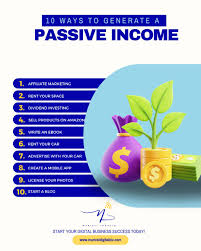
Feeling like your money just sits there? You’re not alone. Many of us work hard for our money, but it doesn’t always work hard for us. What if there was a way to change that, using something you can fit into your normal day? This idea is simple. It can grow over time. And it often offers a better return than you might expect.
The simplest high-yield passive income idea to start is through dividend-paying stocks or Exchange Traded Funds (ETFs). These investments pay you a portion of a company’s profits regularly, requiring minimal daily involvement once set up.
What Are High-Yield Passive Income Streams?
Passive income means making money with little to no ongoing effort. High-yield means getting a good return on your money. Think of it like planting a tree. You plant the seed (your money). You water it a bit (manage it). Then, the tree grows and gives you fruit (income) without you needing to pick every single one.
Many passive income ideas take a lot of upfront work. Think of writing a book or creating an online course. Those are great, but they aren’t always “passive” at first. High-yield passive income, especially the kind we’ll discuss, focuses on making your existing money grow faster. It’s about smart investing.
This type of income can help you reach financial goals sooner. Maybe you want to retire early. Or maybe you just want a bit more freedom each month. Even a small stream of extra money can make a big difference. It adds up over time.
The Core Idea: Dividend-Paying Investments
The most straightforward way to get high-yield passive income is by investing in assets that pay you. The classic example is stocks of companies that share their profits with shareholders. These are called dividend stocks.
When a company makes a profit, it has choices. It can reinvest that money to grow the business. Or, it can pay some of that profit back to the people who own the company – the shareholders. These payments are dividends.
Dividends are usually paid in cash. They can be sent directly to your bank account. Payments can happen monthly, quarterly, or even annually. This cash is pure passive income. You don’t have to do anything extra to earn it.
Why Dividend Stocks Offer High Yields
“High-yield” in this context means the income you receive relative to the amount you invested. Some companies are known for paying generous dividends. These are often mature, stable companies. They don’t need to spend all their profits on rapid growth. They can afford to share more with investors.
Look at some established companies in sectors like utilities, consumer staples, or even real estate investment trusts (REITs). They often have a history of paying out a significant portion of their earnings as dividends. This can lead to a higher yield than you might find in other investment types.
It’s important to remember that “high-yield” also comes with risk. A higher yield often means the stock price might be less volatile, or the company might be paying out a larger percentage of its earnings. This can be good, but you need to understand the company’s financial health.
My Own “Aha!” Moment with Dividend Investing
I remember sitting at my kitchen table a few years back. My bank account showed a decent amount, but it felt like it was just sleeping. I was reading about different ways to make money. Most of them sounded like a lot of work. I wanted something simpler. Something that could just… happen.
I stumbled upon an article about dividend investing. At first, it seemed too good to be true. Companies paying me just for owning a small piece of them? It sounded like magic money. I was a bit skeptical. My dad always said, “If it sounds too easy, it probably is.”
But I dug deeper. I read about companies that had paid dividends for decades. Some had even increased their dividend payments every single year. That’s when it clicked. This wasn’t magic. It was smart business. Companies that are consistently profitable and share that success.
My first small investment was in a utility company. I bought just a few shares. I expected nothing. But then, a few months later, a small deposit appeared in my brokerage account. It was my first dividend payment. It wasn’t much, maybe a few dollars. But it felt like a huge win. It was the first time I truly saw my money working for me, day in and day out, without me lifting a finger. That small win inspired me to learn more and build from there.
Understanding Your Investment Options
When we talk about dividend-paying investments, there are a few main paths you can take:
Individual Dividend Stocks
This means buying shares of specific companies. You pick companies you believe in. You research their history of paying and growing dividends.
It requires more research. But it can offer the highest potential yield if you choose well.
Dividend ETFs (Exchange Traded Funds)
These are baskets of many dividend stocks. An ETF tracks an index. For example, an ETF might hold 50 or 100 of the top dividend-paying companies.
This offers instant diversification. It’s a simpler way to invest in many companies at once.
Dividend Mutual Funds
Similar to ETFs, these funds pool money from many investors. They are managed by a professional fund manager. Mutual funds might have higher fees.
But they can offer expert selection of dividend stocks.
How to Build Your Daily Routine for This Income
The beauty of this passive income idea is its minimal daily impact. It fits into a routine easily. It doesn’t demand hours of your time.
Morning Check-In (5 Minutes)
Before diving into emails, take a quick look at your investment platform. See if any new dividend payments have landed. It’s a nice way to start the day.
Weekly Review (15-30 Minutes)
Once a week, spend a little more time. Review your portfolio’s performance. Check news related to your holdings.
Are there any major changes? This is also a good time to consider adding more funds if you can.
Monthly Reinvestment (Optional, 5 Minutes)
Many brokerage accounts allow you to automatically reinvest your dividends. This means the dividend payments are used to buy more shares of the same stock or ETF. It’s a powerful way to compound your returns over time.
You can usually set this up once and forget it.
The Power of Compounding Dividends
This is where the magic really happens. When you reinvest your dividends, you buy more shares. Those new shares then also earn dividends. Your income grows faster. This is called compounding.
Imagine you have $1,000 invested. It yields 5% per year. That’s $50 in income. If you reinvest that $50, you now have $1,050 invested. The next year, you earn 5% on $1,050, which is $52.50. It might seem small at first. But over 10, 20, or 30 years, the growth becomes very significant.
This strategy turns your initial investment into a growing income-generating machine. The “daily routine” aspect is minimal, but the daily impact of compounding is huge.
Real-World Context: Where This Works Best
This income strategy is well-suited for individuals in the United States. The U.S. stock market is one of the largest and most diverse in the world. It offers a vast selection of companies and ETFs that pay dividends.
Consider the climate: This type of investment is not affected by weather. It doesn’t depend on seasonal demand like some other income streams. It can generate income year-round.
Think about your habits: If you already save a portion of your income, this is a natural next step. Instead of just saving, you’re making your savings work harder. It fits into a habit of financial planning.
What This Means for You: When It’s Normal and When to Worry
Having your money generate income is the goal. So, when is the dividend income you receive normal?
Normal Dividend Income
- Consistent Payments: You receive payments regularly as expected by the company or fund.
- Yield within Range: The percentage of income you receive is in line with similar investments.
- Growth Over Time: If you reinvest, your income amount should gradually increase.
- Company Stability: The companies you own are generally performing well.
Now, when should you pay a little more attention?
When to Worry (or Investigate)
- Dividend Cuts or Suspensions: A company suddenly stops or significantly reduces its dividend. This is a major red flag. It often means the company is in financial trouble.
- Extremely High Yields: A yield that seems too good to be true (e.g., 10-15% consistently from a single company) might indicate high risk. The company might be struggling to maintain payments.
- Company Financial Decline: If the underlying business of the company is weakening, its ability to pay dividends is at risk.
- ETF/Fund Underperformance: If a fund consistently lags its peers or its benchmark index, it might be worth re-evaluating.
Simple Checks You Can Do
You don’t need to be a Wall Street wizard to do basic checks.
Check the Dividend History: Look at how long a company has paid dividends. Has it increased them over time? This shows stability.
Review Payout Ratio: This is the percentage of earnings a company pays out as dividends. A very high ratio (e.g., over 80-90%) might be a concern for sustainability. A lower ratio is often safer.
Read Company News: Keep an eye on major news about the companies you invest in.
Understand Your ETF/Fund: For ETFs and mutual funds, look at their top holdings and their investment strategy.
These simple checks help ensure your passive income stream is as reliable as possible.
Quick Tips for Success
Here are a few actionable tips to make your dividend income journey smoother:
Start Small, Start Now: Don’t wait until you have a massive amount of money. Even small, consistent investments add up thanks to compounding.
Choose a Reputable Brokerage: Use a well-known, regulated investment platform. Look for low fees.
Consider Dividend Reinvestment Plans (DRIPs): Most brokers offer DRIPs. They automatically reinvest your dividends. This is a powerful tool for growth.
Diversify: Don’t put all your money into one stock. Use ETFs or buy shares in several different companies. This spreads your risk.
Think Long-Term: Dividend investing is a marathon, not a sprint. Be patient. Let your money grow over years.
Understand Your Risk Tolerance: How much risk are you comfortable with? This will guide your choice between individual stocks and ETFs.
Tax Implications: Be aware of how dividends are taxed in your country. This can affect your net income.
Frequently Asked Questions
What is the difference between a dividend and interest?
Interest is what you earn on loans, like money in a savings account or bonds. Dividends are payments made by a company to its shareholders from its profits. They are both forms of income, but they come from different sources and have different characteristics.
How much money do I need to start investing in dividend stocks?
You can start with very little. Many brokers allow you to buy fractional shares, meaning you can buy a piece of a stock for just a few dollars. The key is consistency and allowing time for compounding to work.
Is investing in dividend stocks safe?
No investment is completely risk-free. Stock prices can go down, and companies can cut or suspend dividends. However, investing in stable, established companies with a long history of paying dividends is generally considered less risky than investing in speculative stocks. Diversification through ETFs also helps reduce risk.
How often do I receive dividend payments?
Dividend payments vary by company and fund. Many pay quarterly. Some pay monthly, and others pay semi-annually or annually. ETFs and mutual funds that hold many stocks will often distribute dividends monthly or quarterly, based on the payments they receive from their holdings.
Can I lose money with dividend stocks?
Yes, you can lose money. The value of your investment can decrease if the stock price falls. In addition, if a company is in financial distress, it might reduce or eliminate its dividend payments, which would reduce your income. Always invest only what you can afford to lose.
What is a dividend yield?
Dividend yield is the annual dividend payment per share divided by the stock’s current market price per share. It’s expressed as a percentage. For example, if a stock pays $1.00 per share annually and its price is $20.00, its dividend yield is 5%.
Are there any taxes on dividend income?
Yes, dividend income is typically taxable. In the U.S., there are qualified dividends, which are taxed at lower capital gains rates, and non-qualified dividends, which are taxed at your ordinary income tax rate. Holding dividend-paying investments in tax-advantaged accounts like IRAs or 401(k)s can defer or avoid immediate taxation.
Conclusion: Your Money’s New Job
Making your money work for you doesn’t have to be complicated. By understanding and using dividend-paying investments, you can create a high-yield passive income stream. It fits easily into your daily routine. It leverages the power of compounding. This can significantly boost your financial future. Start small, stay consistent, and watch your money grow.