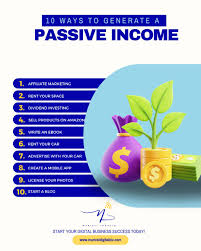
Passive income is money earned regularly with minimal ongoing effort. For many, building a passive income stream involves upfront work to create an asset. This asset then generates income over time.
Popular methods include creating digital products, investing, or building an audience.
Understanding Passive Income Streams
Passive income is a way to earn money. It’s different from your regular job. You don’t trade your time for money directly.
Instead, you build something once. That thing then makes money for you later. Think of it like planting a tree.
You plant it, water it, and care for it. Then, it grows fruit for years. You don’t have to pick the fruit every day.
That’s passive income.
The key is that it requires work at the start. It’s not a get-rich-quick scheme. You need to put in effort.
You might need to learn new skills. You might need to invest some money. But the reward is worth it.
You gain financial freedom. You have more time for what matters most.
There are many types of passive income. Some need a lot of money to start. Others need more of your time and skill.
We will focus on ideas that use your skills and creativity. We will look at how to build them step-by-step. Our goal is to make passive income accessible to more people.
We want to show you how to start small. Then you can grow your income over time.
My Own Journey into Passive Income
I remember feeling stuck a few years ago. My job paid the bills, but it didn’t excite me. I wanted more.
More money, yes, but also more freedom. I’d heard about passive income. I imagined waking up to emails showing sales.
But I had no idea where to begin. It felt like everyone else had a secret map.
I started reading blogs and books. I listened to podcasts. I felt like I was drowning in information.
Most of it seemed too complex or too risky. I tried a few things that didn’t work. It was frustrating.
I almost gave up. One evening, I was scrolling through social media. I saw someone talking about building a niche website.
They explained how they earned money from ads and affiliate links. It sounded simple enough. I thought, “Maybe I can do that.”
I picked a topic I loved. I started writing articles. It took weeks to get even a little traffic.
I felt like giving up again. But then, slowly, things changed. People started finding my articles.
I made my first few dollars from ads. It wasn’t much, but it was real. It was proof that it could work.
That small success fueled me. I learned more and kept going. Now, that website earns me a steady stream of income.
It’s not millions, but it’s a significant part of my earnings. It gave me the confidence to try other passive income ideas. It showed me that with patience and consistent effort, anyone can build their own income streams.
Passive Income vs. Active Income: What’s the Big Difference?
Active Income: This is money you earn by trading your time and effort directly. Think of your regular job. You work hours, and you get paid for those hours.
If you stop working, the money stops.
Passive Income: This is money you earn with little to no ongoing effort. You build an asset or system once. It then generates money for you over time.
Examples include rental properties, dividend stocks, or digital products.
The Goal: Many people aim to shift from active to passive income. This gives them more time and financial freedom. It doesn’t mean quitting your job right away.
It means building income that doesn’t always require your direct involvement.
The Power of a Newsletter for Passive Income
Newsletters are a fantastic tool. They let you connect directly with people. You can share your passion or expertise.
As you build a loyal audience, you can monetize it. This can be through selling your own products. You can also recommend other people’s products.
This is called affiliate marketing. You can even get paid for sponsored content.
Building a newsletter takes time. You need to provide value to your readers. You want them to look forward to your emails.
When you do this well, your audience trusts you. This trust is key to making money. You’re not just sending spam.
You’re building a community. You’re helping people. And in return, they support you.
A newsletter is a platform you own. Unlike social media, you control the content. You control who sees it.
You have direct access to your subscribers. This is very powerful. It’s a direct line to your most engaged fans.
This makes it a great foundation for many passive income ideas.
Why Newsletters Are Still King
Direct Connection: You talk directly to your subscribers. No algorithms stand between you.
Ownership: You own your subscriber list. Social media platforms can change rules or disappear.
High Engagement: People who subscribe want to hear from you. They are often more engaged than followers on social media.
Monetization Options: Newsletters offer many ways to earn money. This includes ads, affiliates, and selling products.
Idea 1: Create and Sell a Digital Product
Digital products are amazing for passive income. You create them once. Then you can sell them over and over.
No need for inventory or shipping. Think of ebooks, online courses, templates, or printables. Your newsletter audience is perfect for selling these.
Step 1: Find Your Niche and Idea
What do you know a lot about? What do people ask you for help with? Your newsletter audience already likes your content.
What problem can you solve for them? Perhaps you’re great at baking. You could create a recipe ebook.
Maybe you know how to use a specific software. You could make a video course. Or maybe you’re good at organizing.
Templates for planners could work well.
Ask yourself:
- What are my hobbies or passions?
- What skills do I have that others want to learn?
- What common questions do my readers ask?
- What problems can I help them solve?
Step 2: Validate Your Idea
Before you create anything, check if people want it. Ask your newsletter subscribers. Send out a survey.
Ask them what they struggle with. You could even pre-sell your product. Offer a discount for early buyers.
This shows you there’s demand. It helps fund your creation.
Pro Tip: A small, focused digital product is better than a huge, overwhelming one. Start simple.
Step 3: Create Your Product
This is where you do the work. If it’s an ebook, write it. Use simple words.
Break it into clear chapters. If it’s a course, record videos. Make them short and to the point.
If it’s templates, design them to be easy to use. Use tools like Canva for design. Use Google Docs or Word for writing.
Focus on quality. Make sure your product delivers on its promise. People will trust you more.
They might buy more from you later.
Step 4: Set Up a Sales Page
You need a place to sell your product. This could be on your own website. Or you can use platforms like Gumroad, Teachable, or SendOwl.
These platforms handle payments for you. They also deliver the digital file automatically. Make your sales page clear.
It should explain what the product is. It should list the benefits. Include testimonials if you have them.
Step 5: Launch and Promote to Your Newsletter
Tell your subscribers about your new product! Send out an email announcing it. Explain why you made it.
Highlight how it will help them. Offer a special launch discount for a limited time. This creates urgency.
Continue to mention your product in future newsletters. Don’t just promote it once.
Example: “Hey everyone, I’m so excited to share my new ebook, ’10 Delicious Vegan Dinners in Under 30 Minutes!’ I created this because so many of you asked for quick, healthy meal ideas. It’s packed with recipes that are easy to follow. For the next 48 hours, you can get it for just $9 (normally $15).
Click here to grab your copy!”
Step 6: Automate and Refine
Once it’s set up, your digital product can sell on its own. People can buy it anytime. You can set up automated email sequences.
These can welcome new customers. They can also suggest other related products. As you get feedback, update your product.
Keep it fresh and valuable.
This is where the passive income part really shines. You do the work upfront. Then, your product makes sales even when you’re not actively working on it.
Your newsletter audience provides a steady stream of potential buyers.
Quick Scan: Digital Product Checklist
Idea Generation: Solves a problem or teaches a skill?
Audience Interest: Have you asked your subscribers?
Product Quality: Is it well-made and helpful?
Sales Platform: Easy to use and trustworthy?
Launch Plan: Clear promotion to your list?
Automation: Can it sell without you?
Idea 2: Affiliate Marketing with Your Newsletter
Affiliate marketing is when you earn a commission. You earn it by promoting other people’s products. You share a special link.
When someone buys through your link, you get paid. Your newsletter is perfect for this.
Step 1: Choose Products You Trust
This is the most important part. Only recommend products you genuinely use and love. Your subscribers trust your recommendations.
If you promote junk, they’ll stop trusting you. Think about products related to your newsletter’s topic. If your newsletter is about gardening, recommend gardening tools or books.
Look for:
- Products you’ve personally bought and enjoyed.
- Products from companies with good reputations.
- Products that truly help your audience.
Step 2: Find Affiliate Programs
Many companies have their own affiliate programs. You can search their website. Or you can join affiliate networks.
Some popular networks include Amazon Associates, ShareASale, CJ Affiliate, and ClickBank. These networks host many different brands.
When you join, you’ll get unique affiliate links. These links track sales that come from you.
Step 3: Integrate Links Naturally into Content
Don’t just spam your newsletter with links. Weave them into helpful content. Write reviews of products.
Create tutorials that use the product. Share your experiences. Tell stories about how the product helped you.
Example: If you have a newsletter about budget travel, you could write about the best travel backpack. You’d describe why you like it. You’d mention its features.
Then, you’d include your affiliate link to buy it.
You can also create dedicated resource pages. Link to these pages from your newsletter. This keeps your emails cleaner.
Step 4: Be Transparent and Honest
It’s crucial to tell your readers that your links are affiliate links. This builds trust. Most countries have rules about this.
In the U.S., the FTC requires disclosure. You can add a simple statement like: “This post contains affiliate links. If you purchase through these links, I may earn a small commission at no extra cost to you.”
This honesty shows integrity. It helps maintain your audience’s trust.
Step 5: Track Your Performance
Most affiliate programs give you dashboards. You can see how many clicks you get. You can see how many sales you make.
Use this data. See which products perform best. Understand what kind of content resonates with your audience.
Adjust your strategy based on what works.
This method can become passive over time. Once you write a great review or tutorial, it can keep earning money for months or years. Your newsletter audience provides a consistent flow of visitors to these recommendations.
Affiliate Marketing Contrast: Myth vs. Reality
Myth: You need to promote tons of products to make money.
Reality: Promoting a few high-quality, relevant products you love is more effective and builds more trust.
Myth: It’s a get-rich-quick scheme.
Reality: It takes time to build an audience and establish trust. Consistent, honest promotion is key.
Myth: You have to be a salesperson.
Reality: You just need to be helpful and share products that genuinely benefit your audience.
Idea 3: Sponsored Content and Partnerships
As your newsletter grows, companies might want to pay you. They might want to advertise their products or services to your audience. This is called sponsored content or a partnership.
It’s another way to earn passive income because you create the content once, but get paid for it.
Step 1: Build a Significant and Engaged Audience
Most companies look for newsletters with a decent number of subscribers. They also care about engagement. Are your subscribers opening your emails?
Are they clicking on links? A smaller, highly engaged audience can be more valuable than a huge, unengaged one.
Focus on growing your list with quality subscribers. Provide consistent value.
Step 2: Create a Media Kit
A media kit is like a resume for your newsletter. It tells potential advertisers about your audience. It should include:
- Your newsletter’s name and topic.
- Audience demographics (age, interests, location if known).
- Subscriber count.
- Open and click-through rates.
- Types of sponsored content you offer (e.g., dedicated email, mention in a regular issue, product review).
- Your rates.
You can create a simple PDF document for this. Make it look professional.
Step 3: Reach Out to Relevant Brands
Identify companies whose products or services align with your audience. Don’t just pitch anyone. Make sure it’s a good fit.
Send them a personalized email. Introduce yourself and your newsletter. Mention why you think their brand would resonate with your readers.
Include your media kit.
Example Pitch: “Dear Marketing Team, My newsletter, ‘The Creative Corner,’ reaches over 5,000 artists and designers. We focus on sharing tips and resources for creative professionals. I’ve been impressed with your new line of .
I believe it would be a perfect fit for my audience. I’ve attached my media kit for your review. I’d love to discuss potential collaboration opportunities.”
Step 4: Negotiate Terms and Pricing
Be clear about what you will deliver. Will it be a dedicated email blast? A section in your regular newsletter?
A product review? Agree on the number of sends or placements. Agree on the price.
Don’t be afraid to negotiate. Research industry rates.
Make sure you have a contract or written agreement. This protects both you and the brand.
Step 5: Create High-Quality Sponsored Content
Deliver excellent content. Even though it’s sponsored, it must still provide value to your readers. Be honest in your review.
Maintain your voice and style. If you promise a product review, make it a genuine, helpful review. A poorly done sponsored post can harm your reputation.
Ensure you clearly label sponsored content. Use phrases like “This is a sponsored post” or “Ad.”
Step 6: Track Results and Build Relationships
Share performance data with the brand. Show them how many people opened the email or clicked the link. This helps them see the value.
It also makes them more likely to work with you again. Building long-term relationships with brands can lead to ongoing income. This can become a more passive stream as you establish trust and they rebook you.
Sponsored Content Flow
Audience Growth: Build a loyal subscriber base.
Brand Fit: Identify relevant companies.
Outreach: Send professional pitches.
Negotiation: Agree on terms and price.
Content Creation: Deliver value to readers.
Reporting: Share results with the brand.
Repeat Business: Foster long-term partnerships.
Idea 4: Build and Sell a Niche Website/Blog
This is a more involved passive income idea. It combines content creation with affiliate marketing, ads, and sometimes digital products. You build a website around a specific topic.
Your newsletter can be a key driver for traffic to this site.
Step 1: Choose Your Niche
Pick a topic you are knowledgeable and passionate about. It should also have an audience that is searching for information. Think about hobbies, specific skills, or common problems.
Examples: sustainable living tips, beginner photography guides, home organization hacks, specific dog breed care.
Consider:
- Is there enough to write about long-term?
- Are people searching for this topic? (Use Google Trends or keyword research tools)
- Are there products or services related to this niche that you can promote?
Step 2: Set Up Your Website
You’ll need a domain name and web hosting. Many providers offer easy-to-use website builders. WordPress is a popular and flexible option.
Choose a clean, fast theme. Make sure your site is mobile-friendly.
Key elements:
- Clear navigation.
- A prominent search bar.
- An easy way for visitors to subscribe to your newsletter.
Step 3: Create High-Quality Content Consistently
Write helpful articles, guides, and reviews. Focus on answering questions your target audience has. Use search engine optimization (SEO) basics.
This means using relevant keywords naturally. It helps people find your site through search engines like Google.
The more valuable content you create, the more visitors you’ll attract. Aim for evergreen content. This is content that stays relevant over time.
Step 4: Drive Traffic with Your Newsletter
Your newsletter is your direct line to your audience. Send out regular updates. Share your latest blog posts.
Tease new content. Encourage subscribers to visit your website. Explain why they should visit – for more in-depth guides, resources, or tools.
A strong newsletter list can send consistent traffic to your website. This is crucial for monetization.
Step 5: Monetize Your Website
Once you have traffic, you can monetize in several ways:
- Display Ads: Join ad networks like Google AdSense, Mediavine, or AdThrive. They place ads on your site. You earn money based on views or clicks.
- Affiliate Marketing: Recommend products or services related to your niche. Use your affiliate links within your articles.
- Digital Products: Create ebooks, courses, or printables that complement your content. Sell them directly on your site or through a platform.
- Sponsored Posts: Brands might pay you to write reviews or articles about their products.
Step 6: Automate and Scale
As your website grows, you can automate many tasks. Use scheduling tools for social media. Set up email autoresponders.
Consider outsourcing some content creation or editing. The goal is to have the website generating income with less of your direct involvement over time.
This requires significant upfront work. But a successful niche website can become a substantial passive income stream. Your newsletter acts as a constant traffic source and a direct sales channel.
Niche Website: Key Components
Topic Selection: Passion meets demand.
Platform Choice: Reliable hosting and CMS (e.g., WordPress).
Content Strategy: Valuable, SEO-friendly articles.
Audience Growth: Newsletter drives consistent visits.
Monetization Methods: Ads, affiliates, products, sponsorships.
Automation: Streamlining operations for passivity.
Real-World Context and Scenarios
Imagine Sarah. She loves baking sourdough bread. She starts a newsletter sharing her tips and favorite recipes.
Her audience grows. They often ask about the best flour or starter maintenance. Sarah creates a downloadable guide: “The Ultimate Sourdough Starter Guide.” She sells it for $7.
She also joins Amazon Associates and links to her favorite baking pans and Dutch ovens in her newsletter. Companies that make artisan flours notice her engaged audience. They offer her $200 to feature their product in a special newsletter edition.
Her initial effort was creating recipes and writing. Now, her newsletter generates income from her guide, affiliate sales, and sponsorships, all while she’s just sharing her passion.
Or consider Mark. He’s a graphic designer. His newsletter focuses on branding tips for small businesses.
His subscribers are always asking for design templates. Mark creates a pack of social media templates and sells them for $25. He also partners with a popular stock photo site, earning a commission when his subscribers buy photos through his unique link.
He also works with a small business software company. They pay him $500 to include a dedicated section about their new CRM tool in his weekly newsletter. Mark’s design skills are now creating multiple income streams.
These aren’t overnight successes. Sarah and Mark spent time building their newsletters. They provided value consistently.
They understood what their audience needed. They leveraged their expertise. Their newsletters became the engine driving their passive income efforts.
The work is upfront, but the ongoing effort is minimal compared to a traditional job.
What This Means for You
It means that passive income is achievable. It’s not magic. It requires smart planning and consistent effort.
Your newsletter is a powerful asset. It’s your direct connection to people who want to hear from you.
When it’s normal to start: You can start building a newsletter today. Even with a small audience, you can begin testing ideas. Ask subscribers what they need.
Start creating simple digital products or find relevant affiliate programs.
When to worry (or re-evaluate): If you’re not seeing engagement on your newsletter, rethink your content. Are you providing enough value? Are you sending emails too often or not often enough?
If your affiliate sales are zero, are you recommending products that genuinely fit your audience? If no one is buying your digital product, perhaps it doesn’t solve a big enough problem, or your sales pitch isn’t clear.
Simple checks:
- Are your emails being opened?
- Are people clicking links?
- Are you getting replies to your emails?
- Are you experimenting with different types of content?
The key is to be patient and persistent. Don’t get discouraged by slow starts. Every successful passive income stream started small.
Your newsletter is the foundation. Build it with value, and the income opportunities will follow.
Quick Fixes & Tips for Success
Here are some actionable tips to help you build your passive income streams using your newsletter:
- Start with ONE idea: Don’t try to do everything at once. Master one passive income method before adding another.
- Focus on VALUE first: Always ask, “How does this help my subscriber?” before you try to sell them something.
- Be consistent: Send your newsletter on a regular schedule. This builds trust and anticipation.
- Segment your list: As your list grows, you can send more targeted emails. This increases relevance and conversions.
- Learn basic email marketing: Understand subject lines, call-to-actions, and automation.
- Track everything: Use analytics to see what works. Adjust your strategy based on data.
- Don’t be afraid to experiment: Try different types of digital products, affiliate offers, or sponsored content.
- Outsource when possible: If writing or design isn’t your strength, consider hiring help for certain tasks. This frees you up to focus on strategy and content.
- Stay updated: The digital world changes. Keep learning about new tools and strategies for newsletters and passive income.
Frequently Asked Questions
What is the easiest passive income idea to start with a newsletter?
Affiliate marketing is often the easiest to start. You don’t need to create a product. You just need to find products you like and share your unique links.
However, it requires building trust with your audience first.
How many subscribers do I need before I can make money?
There’s no magic number. You can start earning with a small, engaged list. Some people make sales with just 100 subscribers if they offer something valuable and relevant.
For sponsored content, you’ll likely need a few thousand subscribers.
How long does it take to build a passive income stream from a newsletter?
It varies greatly. It can take anywhere from a few months to a few years. Building a loyal audience takes time.
Creating valuable products or content also takes effort. Consistency and patience are key.
Do I need a website to start a newsletter?
No, you don’t need a website to start a newsletter. Many email marketing services allow you to create a landing page for sign-ups. However, having a website can help you build authority and offer more ways to monetize, like through ads or selling digital products directly.
Can I make a full-time income from a newsletter?
Yes, it is possible to make a full-time income from a newsletter. Many successful creators do this. It typically involves building a large and engaged audience.
It also involves diversifying your income streams through products, affiliates, and sponsorships.
What are some common mistakes people make with passive income newsletters?
Common mistakes include being inconsistent with emails, not providing enough value, promoting too many irrelevant products, not disclosing affiliate links, and trying to do too much too soon. Focusing on building trust and solving subscriber problems is vital.
Conclusion
Building passive income with your newsletter is a journey. It’s about creating value first. It’s about building trust with your audience.
Whether you create digital products, promote affiliates, or partner with brands, your newsletter is your greatest asset. Start small, be consistent, and focus on helping your subscribers. Your efforts today can lead to greater financial freedom tomorrow.