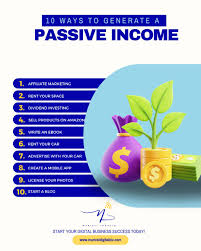
High-yield passive income involves investing in assets or ventures that are expected to generate substantial returns with minimal ongoing effort. This typically requires a significant initial investment of either capital or time and knowledge. Common examples include real estate rentals, dividend-paying stocks, peer-to-peer lending, and digital product creation.
Understanding the associated risks and requiring thorough research is crucial for success.
What is High-Yield Passive Income?
Let’s start with the basics. Passive income means earning money with very little active work involved. Think of it like planting a tree.
You plant it, water it for a while, and then it grows and gives you fruit year after year. You don’t have to pick every single fruit every day.
Now, “high-yield” adds another layer. It means this passive income stream is designed to give you a higher return than typical savings accounts or basic investments. Instead of just a little bit of extra money, high-yield aims for a much more significant amount relative to what you put in.
It’s about getting more fruit from your tree, faster, or a bigger tree to begin with.
This often means that to get that high yield, you usually need to put in a lot upfront. This could be a lot of money, or it could be a lot of your time and brainpower to set things up correctly. There’s no magic wand for instant, easy money.
High yields usually come with either higher risk or a bigger initial investment.
Why Does High-Yield Passive Income Appeal to People?
The idea of money flowing in while you’re sleeping, on vacation, or pursuing other passions is incredibly attractive. Who wouldn’t want that? It promises financial freedom and the ability to live life more on your own terms.
It’s not just about having more money; it’s about having more time and choices.
Imagine this: You’ve worked hard for years. You’ve saved some money. Now, you want that money to start working as hard as you did.
You want it to grow, to provide for you, and maybe even to grow faster than you could earn it by working longer hours. That’s the core appeal of high-yield passive income.
It also offers a way to build wealth without necessarily starting a traditional business that demands your full attention. For many, the thought of running a full-time business is daunting. Passive income ideas feel more manageable, especially those that can be automated or managed with less day-to-day input once they are established.
How Do These Income Streams Actually Work?
The mechanics of high-yield passive income vary a lot. But they generally fall into a few categories. We’ll explore these more, but the core idea is that you invest something first, and then it generates returns.
That investment is usually either capital (money) or labor (your time and effort to create something).
Think of it as setting up a machine. You spend time and money buying the parts and assembling the machine. Once it’s running, it produces widgets automatically.
Your job then shifts from building the machine to making sure it keeps running smoothly and maybe improving it. The widgets are your income.
Some machines are simpler to set up but yield fewer widgets. Others are complex and require a lot of initial effort but produce a flood of widgets. The “high-yield” aspect means we’re looking for machines that produce a lot of widgets for the effort and investment put in.
This often means understanding the market, the technology, and the risks involved.
Key Concepts in High-Yield Passive Income
Initial Investment: This is what you put in first. It can be money, time, or both. The bigger this is, often the higher the potential yield.
Asset Appreciation: The value of what you invest in goes up over time. This is common with real estate or stocks.
Cash Flow: This is money regularly paid out to you. Think of rental income or dividends.
Scalability: How easily can you grow this income stream? Can you add more rental properties or sell more digital products?
Risk Management: High yields often mean higher risk. Knowing how to protect your investment is vital.
Common Types of High-Yield Passive Income Ideas
When we talk about high-yield passive income, certain popular avenues come to mind. These are the ones people often research and try to implement. Each has its own way of working and its own set of pros and cons.
It’s important to see them not as guaranteed wins, but as opportunities with potential.
Let’s dive into some of the most talked-about methods. We’ll look at what they are and how they aim to generate that coveted high yield. Understanding these will help you see the landscape of what’s possible.
It’s like looking at different types of seeds to see which ones might grow into the best fruit-bearing trees.
Real Estate Investing (Rental Properties)
This is a classic. You buy a property, like a house or an apartment. Then, you rent it out to tenants.
The rent money you collect is your passive income. If the rent is high enough to cover your mortgage, taxes, insurance, and other costs, the leftover is your profit.
The “high-yield” part comes from a few factors. First, the property itself might increase in value over time (appreciation). Second, smart property management can maximize rental income.
This might involve choosing good locations, finding reliable tenants, and keeping the property in good shape. It requires a significant amount of capital to start, which is often why the potential returns are high.
But it’s not entirely passive. You have to find the property, get it ready, screen tenants, deal with repairs, and handle vacancies. Many investors use property managers to make it more passive, but that cuts into profits.
Still, when done right, it can be a powerful wealth builder.
Rental Property Quick Scan
| Pros | Cons |
| Potential for appreciation | High upfront cost |
| Regular cash flow | Tenant issues (late rent, damage) |
| Tax advantages | Maintenance and repair costs |
| Leverage through mortgages | Can require active management |
Dividend-Paying Stocks and ETFs
Another popular route is investing in stocks of companies that share their profits with shareholders. These payments are called dividends. Some companies pay them regularly, like quarterly.
When you own enough shares, these dividends can add up to a nice stream of income.
To get a “high yield” here, you often need to invest a larger sum of money. You might also look for stocks that have a history of increasing their dividends over time or companies in industries that are known for paying out a lot. Exchange-Traded Funds (ETFs) that focus on dividend stocks can also offer diversification and a steady income stream.
The stock market has its ups and downs. While dividends provide income, the value of the stocks themselves can go down. So, while it’s passive in that you don’t actively manage the company, it does involve market risk.
It’s a good way to grow wealth if you have the capital to invest and can tolerate market fluctuations.
Peer-to-Peer (P2P) Lending
This is where you lend money directly to individuals or small businesses. You do this through online platforms. The borrower pays you back with interest.
These interest rates are often higher than what you’d get from a traditional bank savings account.
The “high-yield” comes from the higher interest rates offered. However, this also means there’s a higher risk of default. If the borrower can’t pay you back, you lose your money.
To make it high-yield and somewhat safe, you usually need to lend small amounts to many different borrowers to spread out the risk. This diversification is key.
Setting up your loans and monitoring them takes some initial effort. The platforms do a lot of the heavy lifting, like credit checks, but you still need to choose which loans to fund. It’s a way to act like a bank, earning interest on many small loans.
You need to be comfortable with the risk of some borrowers not repaying.
Creating and Selling Digital Products
This involves using your skills or knowledge to create something digital. Think of an e-book, an online course, software, stock photos, or music. Once created, you can sell it over and over again online with very little extra work for each sale.
The “high-yield” potential comes from the fact that your creation costs are mostly upfront. After that, each sale is almost pure profit, especially after platform fees. If your product solves a real problem or offers great value, it can generate significant income.
The more people who want it, the higher the yield.
This requires a lot of upfront work. You need to create a high-quality product, market it effectively, and possibly provide some customer support. It’s passive after the creation and initial marketing push.
Success depends heavily on the quality of your product and your marketing skills. It’s a great option if you have expertise to share or creative talents.
Digital Product Idea: E-books
Concept: Write an e-book on a topic you know well (e.g., gardening tips, a specific software tutorial, a historical event).
Upfront Work: Research, writing, editing, designing a cover, formatting.
Passive Income: Sell on platforms like Amazon Kindle Direct Publishing, Gumroad, or your own website.
Yield Factors: Demand for the topic, quality of writing, effective marketing, pricing.
Affiliate Marketing
This is where you promote other companies’ products or services. You get a unique link. When someone clicks your link and makes a purchase, you earn a commission.
You can do this through a blog, social media, or a YouTube channel.
The “high-yield” comes from its scalability. If you build a large audience that trusts your recommendations, a small percentage of them clicking and buying can lead to significant income. You don’t deal with inventory, shipping, or customer service for the products themselves.
It requires building an audience and trust first. This means creating valuable content consistently. Then, you need to strategically place your affiliate links where they make sense and add value.
It’s passive in that once the content is created and ranked, it can earn money for years, but it needs ongoing content creation and promotion to stay relevant and high-yield.
Investing in a Business (Silent Partner)
Sometimes, “high-yield passive income” means investing money in someone else’s business. You become a silent partner. You provide capital, but you don’t manage the day-to-day operations.
Your return comes from a share of the profits.
The yield depends on the success of the business. If it’s a booming startup or a well-run established company, your return can be substantial. This often requires significant capital and thorough due diligence to ensure the business is sound and the partners are trustworthy.
The risk is that if the business fails, you can lose your entire investment. The reward is that you benefit from the hard work and expertise of the business owners without having to do the heavy lifting yourself. It requires careful selection of the business and clear agreements on profit sharing and exit strategies.
The “High-Yield” Factor: What Makes It Different?
So, what separates a regular passive income idea from a high-yield passive income idea? It’s all about the potential return on your initial investment. This return can be measured in a few ways.
One is the speed at which you make your money back. If you invest $10,000 and it starts earning you $1,000 a month, you’ll recoup your investment in 10 months. That’s a pretty high yield.
If it only earns you $50 a month, it would take over 16 years. High-yield means a faster return.
Another way is the percentage of return over a year. If you invest $100,000 and it earns you $15,000 in a year, that’s a 15% annual return. This is considered high compared to a savings account or bonds.
High-yield often implies returns significantly above the market average, but this usually comes with higher risks.
Understanding “Yield”
Yield is basically the income you get from an investment relative to its cost.
For stocks: Dividend Yield = Annual Dividends per Share / Stock Price. A high dividend yield means you get more income relative to the stock’s price.
For rentals: Rental Yield = Annual Rental Income / Property Value. A high rental yield means the rent you collect is a large portion of the property’s worth.
For P2P Lending: Yield is essentially the average interest rate you earn, minus any defaults.
The Role of Initial Investment (Money vs. Time/Effort)
When we talk about high-yield, it’s crucial to understand where the “investment” comes from. For some ideas, it’s primarily capital. For others, it’s your time, skills, and effort.
Real estate and dividend stocks typically require a large sum of money upfront. You need to buy the property or buy enough shares. The more money you invest, the higher your potential income.
This is a direct capital investment.
Creating digital products, affiliate marketing, or even building a successful blog for ad revenue requires a massive investment of time and skill first. You’re investing your labor to create an asset that then generates income. The “yield” here is measured against the hours and expertise you poured in.
It can feel very high if your creation takes off.
Some strategies, like P2P lending, can start with smaller amounts of money, but you need to lend to many people to achieve a diversified, high yield. This requires more time for setup and research. The best strategies often involve a combination of both capital and effort.
Real-World Scenarios and Experiences
I remember talking to a friend, Sarah, a few years back. She was a graphic designer. She loved her job but was tired of trading hours for dollars.
She had some savings and a lot of design skills. She decided to create an online course teaching advanced Photoshop techniques.
Sarah spent six months creating high-quality video lessons, downloadable resources, and practice files. She poured her heart and soul into it, and her graphic design expertise was evident. She invested her time, energy, and some money into editing software and a course platform.
This was her initial big “investment.”
Once she launched it, she did some targeted social media ads and reached out to design blogs. The course started selling. At first, it was just a few sales a week.
But as word spread and her course gained good reviews, it grew. Now, she makes a good chunk of her income from that one course. She still updates it occasionally and answers student questions, but it’s largely hands-off.
She calls it her “creative passive income machine.” It took a lot of work upfront, but the yield on her time investment has been fantastic. She’s now thinking about creating a second course.
The Risks Involved with High-Yield Passive Income
It’s easy to get excited about high yields, but it’s critical to understand the risks. High returns almost always come with high risks. This is a fundamental principle of investing.
One major risk is loss of capital. If your investment fails, you could lose all the money you put in. This is very real with things like stock market crashes, real estate downturns, or business failures.
With P2P lending, borrowers can default, meaning you don’t get your money back.
Another risk is illiquidity. Some passive income streams are hard to turn back into cash quickly. Selling a rental property can take months.
If you need your money fast, you might have to sell at a loss. Stocks are generally liquid, but if the market is down, selling means realizing a loss.
There’s also the risk of scams. If something sounds too good to be true, it often is. Promises of guaranteed, incredibly high returns with no risk are a huge red flag.
Always do your homework and be wary of anything that feels off.
Common Pitfalls to Avoid
- Not researching enough: Jumping into an investment without understanding it.
- Chasing unrealistic returns: Believing promises of guaranteed high profits.
- Putting all your eggs in one basket: Not diversifying your passive income streams.
- Underestimating the upfront work: Thinking “passive” means “zero effort.”
- Ignoring fees and taxes: These can significantly eat into your profits.
When is it “Normal” vs. “Concerning”?
Not all passive income is created equal. Understanding the difference between normal, healthy returns and concerning red flags is key.
Normal: A consistent return that aligns with industry averages or expected market performance. For instance, a dividend yield of 2-5% on a stable stock is normal. Rental yields of 4-8% in many markets are also considered typical.
These are steady, understandable returns.
Concerning: Returns that are astronomically high and guaranteed, especially if there’s pressure to invest quickly. If someone promises you 50% per month with no risk, it’s a major warning sign. Also, if your passive income source suddenly dries up with no clear explanation, that’s concerning.
A significant drop in property value or a company cutting its dividends unexpectedly also warrants attention.
For digital products, a “normal” yield might be that it takes a while to gain traction, but it consistently sells a few copies a week. A “concerning” sign would be if you’ve put in massive effort and months later, it’s generating almost nothing, and you can’t figure out why, or if competitors with better products are flooding the market.
What This Means for You: Setting Realistic Expectations
If you’re considering high-yield passive income, the most important thing is to set realistic expectations. It’s not a get-rich-quick scheme.
It takes time and often a significant initial investment of either money or effort. You need to be patient. The income might start small and grow over time.
Think of it like tending a garden; you plant seeds, water them, and wait for them to grow. You don’t get a harvest the next day.
Be prepared for the work involved. Even “passive” income requires some oversight. You might need to check on your investments, update your digital products, or manage tenant issues.
The goal is to minimize your active time, not eliminate it entirely. The more you can automate or outsource, the more passive it becomes.
Your Passive Income Checklist
- Goal Setting: What do you want your passive income to achieve?
- Risk Tolerance: How much risk can you comfortably take?
- Initial Capital: How much money can you invest upfront?
- Skills & Time: What skills do you have? How much time can you commit?
- Research: Have you thoroughly researched your chosen method?
- Diversification: Do you have multiple income streams?
Tips for Maximizing Your Passive Income Yield
Once you’ve chosen a path, there are ways to improve your returns. These are not magic bullets, but smart strategies that can make a difference over time.
Diversify: Don’t rely on just one source. Having multiple passive income streams can provide stability. If one falters, others can pick up the slack.
For example, don’t just invest in dividend stocks; maybe add a rental property or a digital product.
Reinvest Earnings: Instead of taking all your passive income as cash, consider reinvesting some of it back into the income stream. This is like planting more seeds or buying more fertilizer for your fruit trees. Reinvesting in more stocks, another rental property, or marketing for your digital product can accelerate growth.
Continuous Learning: The world changes. Markets shift. New technologies emerge.
Stay informed about your chosen passive income methods. Read industry news, follow experts, and be willing to adapt your strategy. For example, if interest rates change, you might need to adjust your P2P lending strategy.
Optimize and Automate: Look for ways to make your passive income streams even more passive. Can you hire a property manager? Can you set up automated marketing for your digital product?
Can you use software to track your investments more efficiently? Automation saves time and can increase efficiency, thus boosting your effective yield.
Frequently Asked Questions
Is high-yield passive income legal?
Yes, as long as the methods are legitimate and you comply with all tax laws. Be very wary of any scheme that promises unusually high returns with no risk, as these are often illegal scams.
How much money do I need to start with?
It varies greatly. You can start investing in dividend ETFs with just a few hundred dollars. Real estate requires tens or hundreds of thousands.
Creating digital products can start with just your time and a computer.
What’s the difference between passive and active income?
Active income is money earned from trading your time and effort directly, like a salary from a job. Passive income is earned with minimal ongoing effort after an initial investment of time or money.
Can I lose money with high-yield passive income?
Yes, absolutely. High yield often comes with higher risk. Investments can lose value, businesses can fail, and borrowers can default.
How long does it take to see returns?
This depends entirely on the method. Some might start paying small amounts quickly, while others, like real estate appreciation or a slowly growing online course, can take months or years to show significant returns.
Are there any truly “set it and forget it” passive income ideas?
Very few. Most require some level of monitoring or occasional maintenance. However, some, like owning diversified dividend ETFs or certain well-established digital products, come very close once set up correctly.
Conclusion
Exploring high-yield passive income ideas is an exciting journey toward financial growth. It’s about using your resources wisely, whether that’s capital or your unique skills. Remember that while the potential rewards are significant, so are the risks.
Due diligence, patience, and a clear understanding of how each method works are your best tools. By setting realistic goals and choosing strategies that align with your risk tolerance and resources, you can build streams of income that truly work for you.