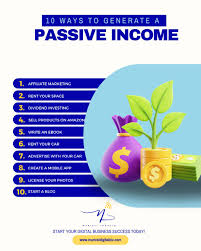
You can start a high-yield passive income idea in 7 days by focusing on digital products, affiliate marketing, or niche content creation. The key is to choose something with low startup costs and high scalability. Research your audience.
Create a valuable product or content. Then, promote it effectively. Consistent effort in the first week sets the stage for future earnings.
What is High-Yield Passive Income?
Passive income means earning money with minimal ongoing effort. High-yield means it earns a good amount of money. It’s not a get-rich-quick scheme.
It needs work upfront. But then it can keep paying you. Think of it like planting a tree.
You dig the hole and plant the seed. You water it. Later, it gives you fruit.
You don’t have to dig every day. You just pick the fruit. Passive income is similar.
You build something once. Then it works for you over time. This can be a book.
It could be an online course. It might be a blog with ads. Or even renting out a property.
The goal is money that comes in without you trading time for it directly.
Why is it “high-yield”? This just means it has the potential to earn more than just pocket change. It’s about building something that can scale.
Something that can reach many people. Or charge a decent price for its value. It’s not about earning a dollar a month.
It’s about building a real income stream. One that can eventually replace a job. Or just give you more financial freedom.
It takes smart planning. And some effort at the start. But the rewards can be huge.
The key difference from active income is this. Active income is trading time for money. Like your day job.
Passive income is building an asset. This asset then generates money. It can take time to build that asset.
But once it’s built, it works harder for you. It works when you sleep. It works when you are on vacation.
This is the dream for many. And with the right ideas, it is achievable. Even starting quickly.
My First Passive Income Stumble
I remember feeling so stuck a few years ago. My day job was fine. But I wanted more.
More control over my time. More money for my dreams. I saw all these “passive income gurus.” They talked about making millions.
I felt like I was failing before I even started. One evening, I decided to try something. I had a hobby I loved.
I enjoyed drawing little cartoon characters. I thought, “Maybe I can sell these?” I spent days designing a few. Then I made them into digital stickers.
I listed them on an online shop. I waited. And waited.
Nothing happened. I felt so discouraged. It felt like a waste of time.
I had put in effort. But I got no income. It was a lonely feeling.
I almost gave up. But then I learned that just making something isn’t enough. You have to know who wants it.
And how to show it to them.
The 7-Day Passive Income Sprint: Picking Your Path
Starting a high-yield passive income idea in 7 days means being strategic. You can’t build an empire overnight. But you can lay a very strong foundation.
The trick is to pick something that has quick setup potential. And a clear path to earnings. You need to focus on speed and impact.
Let’s look at a few of the best ways to do this. These are ideas that can show results within your first week of focused effort. The goal is to launch something.
Get it in front of people. And start learning what works.
What kind of ideas fit this 7-day sprint? They usually involve digital assets. Or leveraging existing platforms.
They require your time and brainpower more than cash. This makes them fast to start. High-yield comes from their ability to reach many.
Or to be priced based on value, not just hours. You are building something that can be sold over and over. Without extra production cost each time.
That’s where the magic of passive income truly lies. It’s about leverage.
Fast-Start Passive Income Paths
Digital Products: Think e-books, printables, templates. These are created once. Sold many times.
Affiliate Marketing: You promote other people’s products. Earn a commission on sales.
Niche Content Sites: Build a blog or YouTube channel. Monetize with ads or sponsorships.
Online Courses: Share your expertise. Teach others a skill. Recorded content is passive.
The key is to choose ONE. Trying to do all of them at once is a recipe for overwhelm. And it guarantees you won’t finish in 7 days.
Pick the one that sparks your interest. And where you feel you can create value. Even if it’s a small niche.
Small niches are often easier to dominate quickly.
Option 1: Digital Products – Your First Downloadable Asset
Digital products are fantastic for a quick start. Why? Because you create them once.
Then you can sell them endlessly. There are no shipping costs. No inventory to manage.
The startup cost is usually just your time and maybe some software. Think about what people need help with. Or what problems they have.
Can you create a simple guide? A checklist? A planner?
Or maybe some social media templates?
For a 7-day sprint, focus on something very specific. A “mini-product.” Instead of a 200-page e-book, maybe a 20-page guide. Instead of a full course, maybe a single masterclass video.
This makes it achievable within your timeframe. What problem does your mini-product solve? Make sure it’s a real problem for a real group of people.
For instance, if you’re good at organizing, you could make a “7-Day Declutter Challenge Planner.” Or if you know social media, create “50 Engaging Instagram Post Prompts for Small Businesses.”
Setting up is quick too. You can use platforms like Etsy for printables. Or Gumroad and Payhip for e-books and templates.
These platforms handle payments. They deliver the product automatically. You just need to upload your creation.
And write a good description. This means you can have a product ready to sell in a day or two. The rest of the week can be spent on promoting it.
Finding your first customers.
I once helped a friend create a set of digital art brushes. She was a graphic designer. She spent a weekend creating them.
Then she listed them on her website. Within a week, she had her first few sales. It wasn’t huge money.
But it was proof. Proof that people would pay for her digital creations. And that she could earn without being there.
Digital Product Ideas for a Quick Launch
- Printable Planners: Weekly, daily, budget, meal prep.
- E-books/Guides: Short, focused on one topic.
- Templates: Social media posts, resumes, invoices, budgets.
- Digital Art/Clipart: For designers or crafters.
- Worksheets: For learning, self-improvement, or business.
Remember, the goal for the 7-day sprint is to launch. Perfection is not required. Done is better than perfect.
Get your first digital product out there. Then you can improve it based on feedback. Or create more.
Option 2: Affiliate Marketing – Selling Other People’s Stuff
Affiliate marketing is another great path for a quick start. You don’t need to create your own product at all. Instead, you partner with companies.
You promote their products or services. When someone buys through your unique link, you get a commission. This can be a percentage of the sale.
Or a fixed amount. It’s a powerful way to earn. Because you’re leveraging established products.
To make this work in 7 days, you need a platform. This could be a blog, a social media account with followers, or a YouTube channel. If you don’t have one, you can create one quickly.
Focus on a niche you know. And where you can genuinely recommend products. Honesty is key here.
People trust recommendations from people they know. Or from sources they find helpful.
The first step is choosing a niche. What are you interested in? What problems can you help solve with products?
For example, if you love coffee, you can review coffee makers. Or offer tips on brewing. Then you find companies that sell related products.
Amazon Associates is a popular starting point. Many other companies have their own affiliate programs. You sign up.
You get your unique links. You start sharing them.
In your 7-day sprint, you can create some initial content. Write a few blog posts. Or record a few short videos.
Each piece of content should naturally include product recommendations. For example, a blog post titled “My Top 3 Coffee Grinders for Home Baristas.” In that post, you’d link to those grinders using your affiliate links. You could also create a “Resources” page on your blog.
Listing all the tools and products you use and recommend.
The “high-yield” part comes from choosing products with good commission rates. Or by promoting products that are popular. And have a high sales volume.
It also comes from building trust. The more people trust your recommendations, the more they will buy. This requires consistency.
But you can get those first links out there within a week.
I saw someone build a small niche website about camping gear. They started with just a few reviews. They didn’t have many visitors at first.
But they were honest. And detailed. Over time, people started finding their site.
And clicking their affiliate links. It wasn’t a huge income in the first month. But it was a steady stream.
And it grew as they added more helpful content.
Affiliate Marketing Quick-Start Steps
- Choose Your Niche: What are you passionate about?
- Find Affiliate Programs: Amazon, ShareASale, CJ Affiliate, or company-specific programs.
- Create Content: Write reviews, tutorials, comparison posts.
- Include Your Links: Naturally weave affiliate links into your content.
- Promote Your Content: Share on social media, email lists, etc.
The key is to be helpful. Don’t just spam links. Provide value.
Solve a problem. Recommend products that genuinely help your audience. This builds trust.
And trust leads to sales. And sales lead to passive income.
Option 3: Niche Content Creation – Building an Audience
This path is about building an audience around a specific topic. Think blogging or starting a YouTube channel. The “passive” part comes later.
When your content starts generating ad revenue. Or when you can leverage that audience for other passive income streams (like selling your own digital products). For a 7-day sprint, the goal is to launch your platform.
And publish your first few pieces of content.
The first step is choosing a niche. This needs to be specific. Instead of “food,” maybe “easy vegan weeknight meals.” Instead of “travel,” maybe “budget travel in Southeast Asia.” A narrow niche makes it easier to stand out.
And to attract a dedicated audience. What are you knowledgeable about? What do you enjoy talking about?
What problems can you solve for people?
In your 7-day sprint, you can achieve a lot. You can set up your blog or YouTube channel. You can brainstorm content ideas.
You can write and publish your first 3-5 blog posts. Or record and upload your first 2-3 videos. The key is to create high-quality, valuable content.
Content that answers questions. Solves problems. Or entertains.
For a blog, platforms like WordPress.org (with Bluehost or SiteGround) or even simpler ones like Medium can get you started quickly. For YouTube, it’s free to create a channel. You’ll need a decent smartphone for recording.
And some basic editing software (often free options exist). Focus on clarity and value. Don’t worry too much about fancy production values at first.
Once you have content published, you need to promote it. Share your blog posts on social media. Share your videos with relevant communities.
The more people see your work, the faster your audience will grow. And the faster you can reach the point where your content starts earning passively through ads.
I know someone who started a YouTube channel about caring for indoor plants. They had no experience with video editing. But they were passionate.
They filmed simple videos with their phone. They talked clearly. And shared practical tips.
Within a few months, they were getting thousands of views. And earning decent money from YouTube ads. Their initial 7-day sprint was just about getting that first channel set up and uploading their first few videos.
Niche Content Platform Setup (7 Days)
- Choose a Niche: Specific and interesting.
- Select Your Platform: Blog (WordPress) or YouTube.
- Set Up Your Channel/Site: Simple branding, clear name.
- Brainstorm Content Topics: What questions do people ask?
- Create & Publish Initial Content: Aim for 3-5 pieces.
- Promote Your Content: Share on social media.
This path requires patience. Audience growth takes time. But the initial launch can absolutely happen within 7 days.
This sets the stage for future passive earnings. It’s an investment in a long-term asset. Your audience and your content library.
Real-World Context: Where the Money Shows Up
Let’s talk about where these passive income streams actually generate cash. It’s not always obvious at first. For digital products, the sales happen through the platforms you choose.
So, if you list on Etsy, Etsy takes a small fee. Then the rest goes to you. If you use Gumroad, they take a small percentage.
Your earnings appear in your account. You then transfer them to your bank. It’s quite direct.
The “passive” part is that once the product is uploaded, it’s always available. People can buy it anytime. Day or night.
Even when you’re not working on it.
With affiliate marketing, the process is similar but with more steps. You promote a product. A customer clicks your link.
They buy the product. The company you are affiliated with tracks that sale. They then pay you a commission.
This usually happens on a monthly basis. So, you might make sales on January 15th. But you won’t get paid until February.
Many programs have a minimum payout threshold. Like $50 or $100. This ensures they don’t have to send tiny checks.
You need to reach that amount to get your earnings. It feels passive because you set up the content once. And the links keep working for you.
For niche content sites with ads, like a blog or YouTube, it’s a bit different. Google AdSense is a common way to start. They place ads on your content.
You earn money based on clicks or impressions (how many people see the ads). This money also typically pays out monthly. Usually after you reach a certain threshold.
The content you create stays online. And continues to attract visitors. Those visitors see ads.
And you earn money. This is a very hands-off approach. Once the content is live and performing.
The environment for this kind of income is your computer. Or your smartphone. You need internet access.
And the willingness to learn. You’re not opening a physical store. You’re not handling physical goods.
It’s all digital. Your “real-world” impact is the problem you solve for your customers. Or the value you provide to your audience.
This is why digital products and online platforms are so good for starting fast. They remove many of the traditional barriers to starting a business.
What This Means for You: Getting Started Fast
So, what’s the takeaway for your first week? It means you can stop dreaming and start doing. The biggest hurdle for most people is simply taking that first step.
The idea of “passive income” can sound huge. Like it requires massive effort or a huge investment. But it doesn’t.
Not at the start. Your first 7 days are about launching a minimal viable product. Or a minimal viable platform.
It’s about getting something out into the world.
If you choose digital products, it means designing, writing, and uploading. If you choose affiliate marketing, it means picking a niche, finding a program, and writing your first review. If you choose content creation, it means setting up your blog or channel and publishing your first posts or videos.
It’s about action. Focused action. Don’t get bogged down in the “what ifs.” Or the “what if it fails?” Failure is just learning.
What’s normal in this first week? It’s normal to feel a bit overwhelmed. It’s normal to doubt yourself.
It’s normal to not make a million dollars on day one. What’s not normal is giving up before you even start. Or not trying at all.
The goal isn’t instant riches. It’s building momentum. It’s creating an asset that can grow.
And earn for you over time. This is achievable. Even for beginners.
And starting within 7 days is completely possible.
When should you worry? You shouldn’t worry if you don’t see massive sales immediately. That’s expected.
You should worry if you get stuck in analysis paralysis. If you spend all 7 days planning but never launching. Or if you create something nobody wants.
This is why getting feedback is important. Even if it’s just from friends. Or by looking at initial engagement metrics.
Simple checks you can do:
- Is my product solving a real problem? (For digital products)
- Are my affiliate recommendations genuine and helpful?
- Is my content answering questions people are actually asking?
- Am I getting any traffic or engagement at all?
These are basic checks. They tell you if you’re on the right track. Or if you need to pivot slightly.
But they don’t require a complex system. Just honest assessment. And a willingness to adapt.
Quick Tips for Your 7-Day Sprint
Here are some practical tips to help you make the most of your first week. These are designed to keep you focused and moving forward. Remember, speed and action are your friends right now.
7-Day Sprint Action Plan
- Commit: Block out time in your calendar. Treat it like an important appointment.
- Choose ONE idea: Don’t try to do everything. Pick one path and stick to it for the week.
- Focus on Value: What problem are you solving? Who are you helping?
- Keep it Simple: Your first product or content doesn’t need to be perfect. It just needs to exist.
- Learn as You Go: Don’t wait until you know everything. Start now and learn from the process.
- Promote Immediately: As soon as you have something, start telling people about it.
- Get Feedback: Ask early users or friends for their honest thoughts.
Don’t wait for the “perfect” moment. The perfect moment is now. You have the tools.
You have the information. All you need is the decision to act. Your 7-day sprint is about building that crucial habit.
The habit of launching. Of creating. And of putting your work out there.
Frequently Asked Questions About Starting Passive Income Fast
Can I really start a high-yield passive income idea in just 7 days?
Yes, you can absolutely start the process in 7 days. This means launching a product, setting up a platform, or getting your first affiliate links live. High-yield comes with time and growth, but the foundation can be built rapidly with focused effort.
What is the lowest-cost way to start passive income?
Digital products and affiliate marketing generally have the lowest startup costs. They rely more on your time and knowledge than on a large financial investment. You can often use free or low-cost tools to get started.
How much money can I expect to make in the first week?
It’s best not to set high income expectations for the first week. The goal is to launch and learn. You might make a few sales or get your first few website visitors.
Consistent effort over time is what leads to significant earnings. Think of it as planting a seed.
What if I don’t have a lot of experience or skills?
Many successful passive income streams are built on skills that seem small to you but are valuable to others. Think about everyday tasks you do well. Or hobbies you enjoy.
You can also learn new skills as you go. Focus on sharing what you know, even if it’s basic.
Do I need to be good at marketing to succeed?
Marketing is important, but it doesn’t need to be complicated at first. Start by sharing your work where your potential audience hangs out. Be helpful.
Be clear about the value you offer. As you learn what works, you can refine your marketing efforts.
Which passive income idea is best for beginners?
For beginners wanting to start fast, digital products (like printables or templates) and affiliate marketing are often the easiest. They require less technical setup than building a full online course from scratch and can show initial results quicker.
Conclusion: Your First Step to Financial Freedom
Building passive income is a journey. But that journey can start today. In just 7 days, you can launch your first idea.
You can get it in front of people. And begin earning. Focus on action.
Choose one path. And commit to putting it out there. Your future self will thank you for starting now.
It’s a powerful feeling to create something that works for you.